


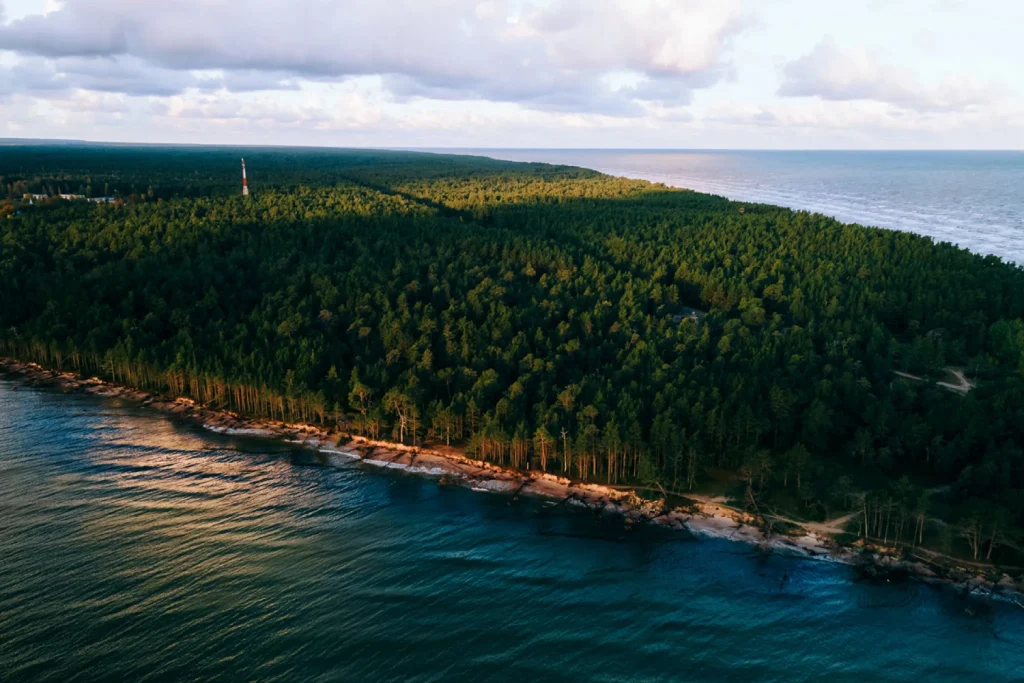
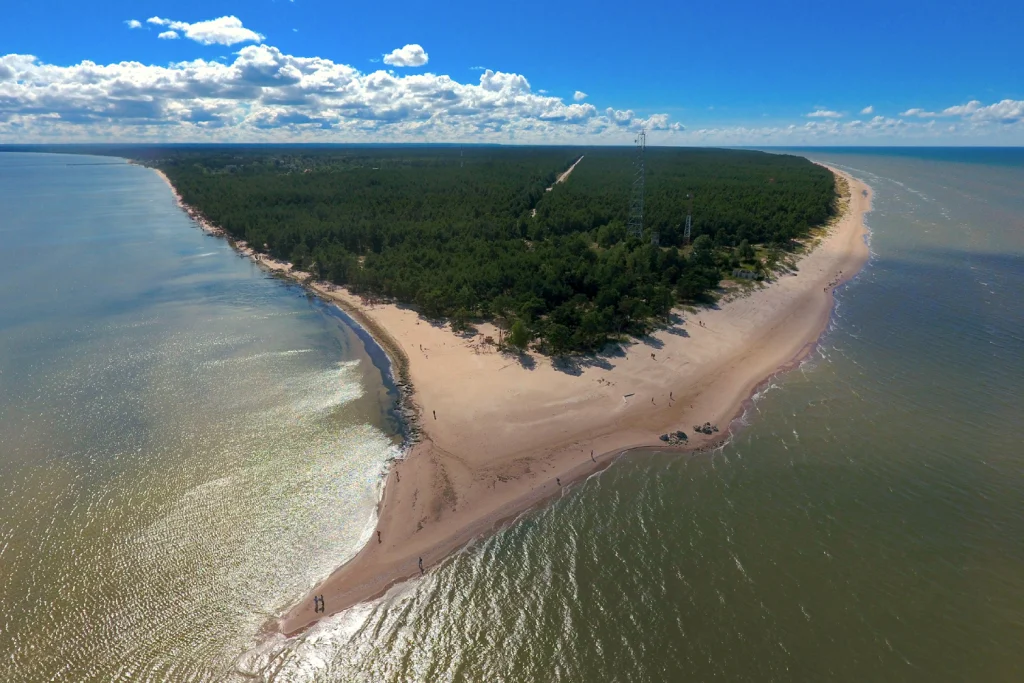
Latvia has no shortage of beautiful coastal destinations, but few feel quite as distinctive as Cape Kolka. Located at the northern tip of the Kurzeme Peninsula, this remote stretch of coastline is where the waters of the Baltic Sea meet the Gulf of Riga. It is a place of wide beaches, pine forests, changing skies and a maritime landscape shaped by centuries of fishing, sailing and coastal life.
Known locally as Kolkasrags, Cape Kolka is more than a scenic viewpoint. It is an important stop for migratory birds, a gateway to Slītere National Park and part of the historic Livonian Coast, where the culture and traditions of the Livonian people remain an important part of the region’s identity.
Whether you are planning a day trip from Riga, exploring Latvia’s quieter coastal communities or travelling through the Baltic states, Cape Kolka deserves a place on your itinerary.
This guide covers the best things to do at Cape Kolka, the best time to visit, transport options, nearby attractions and practical details to help you plan your trip.
Where Is Cape Kolka in Latvia?
Cape Kolka is situated in the Talsi region of northwestern Latvia, at the northernmost point of the Kurzeme Peninsula. It extends into the Baltic Sea, forming a natural meeting point between the open Baltic Sea and the Gulf of Riga.
The cape is approximately 150 kilometres from Riga by road, although the actual journey time depends on your route, traffic and stops along the way. It is surrounded by a relatively quiet coastal landscape, with small fishing villages, forested areas and long stretches of beach.
Its geographical position gives Cape Kolka a character that is different from Latvia’s more developed seaside destinations. Rather than promenades and busy resort facilities, visitors find open coastal scenery, pine trees, shifting sandbanks and a strong connection with nature.
Cape Kolka is also an excellent starting point for exploring Slītere National Park and the Livonian Coast. These neighbouring areas offer opportunities to discover Latvia’s natural environment and a distinctive cultural heritage that is less familiar to many international visitors.
Why Is Cape Kolka Worth Visiting?
The main attraction is the meeting of two bodies of water. The Baltic Sea and the Gulf of Riga approach the cape from different directions, creating a striking coastal setting. Waves and currents interact around the shallow sandbank, making the landscape particularly interesting to observe. However, the experience is not limited to the sea.
Cape Kolka is especially appealing if you enjoy:
- Unspoilt coastal scenery: Wide beaches, open horizons and relatively undeveloped surroundings make it a peaceful place to spend time outdoors.
- Birdwatching: Its geographical position makes the cape an important point along several migratory routes.
- Walking and nature: Pine forests, coastal trails and nearby protected landscapes offer opportunities to explore beyond the beach.
- Local culture: Kolka and the surrounding villages are part of the historic Livonian Coast.
- Photography: The changing light, coastal landscape, sea views and birdlife provide plenty of photographic opportunities.
It is also a destination for travellers who want to experience a quieter side of Latvia. If your itinerary already includes Riga, Jūrmala or other popular attractions, Cape Kolka offers a very different atmosphere.
Best Things to Do at Cape Kolka
There are several ways to experience Cape Kolka, from a short walk along the beach to a longer day exploring the surrounding national park and coastal villages.
1. See Where the Baltic Sea Meets the Gulf of Riga
The meeting of the Baltic Sea and the Gulf of Riga is the defining feature of Cape Kolka. The cape projects into the water, with a shallow underwater sandbank extending several kilometres offshore. This geographical formation influences the movement of waves and currents around the point.
Visitors often come expecting to see a perfectly defined line separating two seas. In reality, the meeting is a natural process rather than a permanent visible boundary. Depending on the weather, wind and water conditions, the sea can appear calm, rough or noticeably different on either side of the cape.
Walk along the shoreline and take time to observe the changing water. On a windy day, the waves can create a dramatic scene, while calmer conditions offer a more peaceful coastal experience.
The best approach is not to rush straight to the viewpoint, take a photograph and leave. Spend some time exploring both sides of the cape and appreciating how the landscape changes.
2. Walk the Cape Kolka Pine Trail
The Cape Kolka Pine Trail is a good option for visitors who want to experience more than the open beach. The coastal pine landscape provides a different perspective on the area. Walking among the trees offers some shelter from the wind and allows visitors to appreciate the natural environment surrounding the cape.
The trail is particularly worthwhile if you are interested in the relationship between Latvia’s forests and coastline. Pine trees, sandy ground and coastal vegetation create a landscape that feels distinctly different from the country’s urban attractions.
Take comfortable walking shoes, especially if you plan to combine the trail with a longer beach walk. Conditions can vary with the weather, and sandy or damp sections may require a little extra care.
3. Climb the Cape Kolka Observation Tower
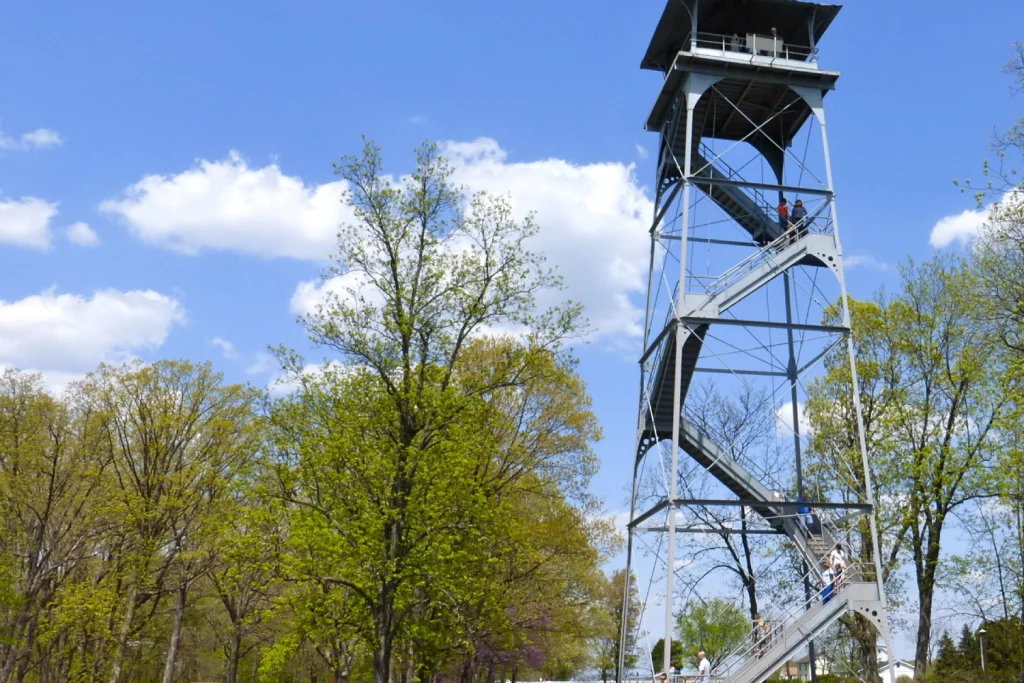
The observation tower near the pine trail provides an elevated view of the surrounding coastal landscape. From above, you can appreciate the shape of the cape, the surrounding forest and the open water. It is a useful stop for photography and for understanding the geographical layout of the area.
The tower is particularly interesting for visitors who want to see how the coastline extends into the sea. It also offers a different perspective from the beach, where the horizon can make it difficult to appreciate the wider shape of the landscape.
If birdwatching is part of your visit, an elevated viewpoint may also help you observe activity across the surrounding area. However, bring binoculars if you want to identify birds at a distance.
4. Visit Kolka Lighthouse
Kolka Lighthouse is one of the most recognisable landmarks associated with the cape, but its location is important to understand before planning a visit.
The lighthouse stands on an artificial island approximately five to six kilometres offshore, at the end of the shallow sandbank extending from Cape Kolka. It is not the kind of lighthouse that visitors can simply reach by walking along the beach.
The original wooden lighthouse was first lit in 1875. The present metal tower was built after the artificial island was established and began operating in 1884. The lighthouse is now automated.
Its offshore location is part of what makes it so distinctive. The surrounding waters have historically presented challenges for shipping, and the lighthouse remains an important feature of the maritime landscape.
Do not assume that a regular public boat service is available. If visiting the lighthouse by water is important to you, check locally for current, authorised sailing or boat-trip arrangements before travelling. The Latvian tourism authority notes that the area is suitable for sailing only under limited conditions, so access depends on the weather and sea conditions.
Even if you do not visit the lighthouse itself, you can appreciate its place in the history and geography of Cape Kolka.
5. Go Birdwatching During Migration Season
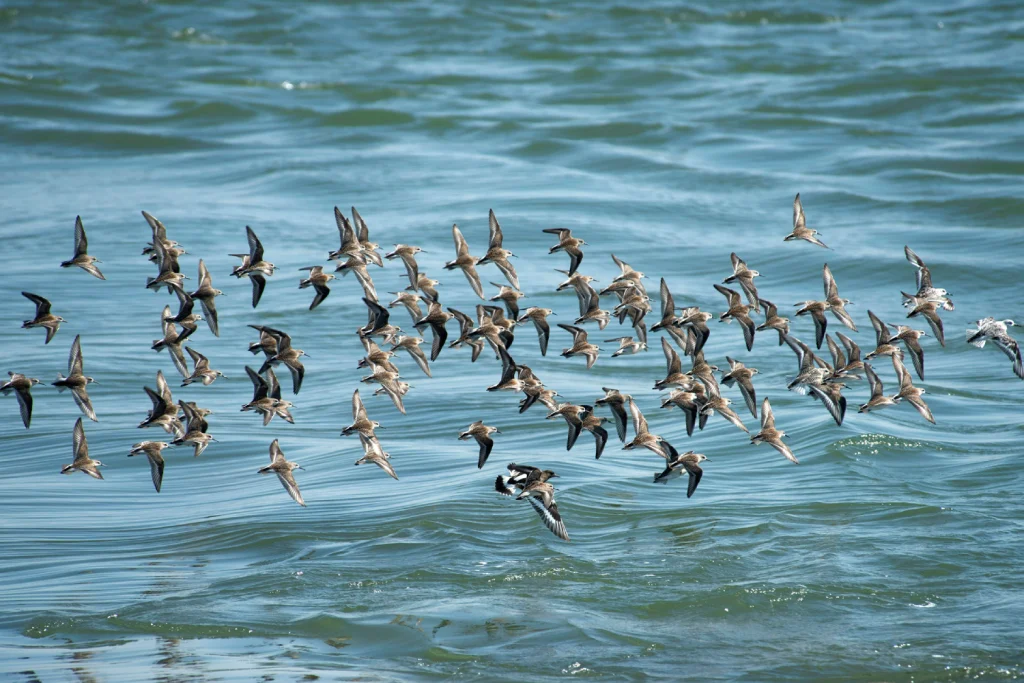
Cape Kolka is one of Latvia’s best-known locations for observing migratory birds. Its position along the coast creates a natural point where birds travelling between their breeding and wintering grounds pass through the area. The cape and nearby coastal waters are also important for feeding and resting birds.
Spring is particularly rewarding. Migration begins in late February and continues until late May, with April and early May generally considered especially good periods for birdwatching.
Autumn migration offers another opportunity, although the species and patterns differ from those seen in spring. Waterbirds and waders can be particularly interesting during this period.
Depending on the season, weather and conditions, visitors may observe different species of ducks, geese, gulls, terns, cranes and smaller land birds.
A few tips can make your visit more enjoyable:
- Bring binoculars if you have them.
- Allow at least a couple of hours if birdwatching is a major reason for your visit.
- Check the wind direction and find a sheltered observation point when conditions are uncomfortable.
- Avoid approaching or disturbing birds resting along the shore.
- Consider arranging a specialist birdwatching excursion if you want a more guided experience.
You do not need to be an experienced birdwatcher to appreciate the spectacle. Even casual visitors can enjoy watching flocks move across the coastline, particularly during periods of active migration.
6. Explore Kolka Village
A visit to Cape Kolka is a good opportunity to explore Kolka village itself. Kolka is part of the Livonian Coast, a stretch of Kurzeme coastline historically associated with Livonian communities. The Livonians, also known as Livs, are a small Finnic people with a distinctive language and cultural heritage.
The village provides an opportunity to understand that the coastline is not simply a natural attraction. It is also a place where communities have lived in close relationship with the sea for generations.
Visitors can look for local cultural references, traditional buildings and the village’s churches. Kolka has Lutheran, Orthodox and Roman Catholic church buildings, reflecting different religious traditions within the community.
If you have time, look for locally produced food and smoked fish. Availability can vary by season and business, so do not assume every producer or food outlet will be open when you arrive.
Take a respectful approach when exploring the village. These are living communities, not open-air museums, and their everyday character is part of what makes the Livonian Coast worth discovering.
7. Enjoy the Beach and Coastal Scenery
The beaches around Cape Kolka are ideal for visitors who want a quiet coastal walk. Rather than expecting a fully developed beach resort, think of the area as a natural shoreline where the main attraction is the landscape itself.
Walk along the sand, listen to the waves and enjoy the open views. Depending on the season, you may encounter changing light, driftwood, birds and interesting coastal textures.
Summer is generally the most comfortable season for a relaxed beach visit, although the weather in Latvia can change quickly. Even in warmer months, the wind can make the shoreline feel cooler than expected.
Swimming requires particular caution. Currents and changing sea conditions around the cape can be hazardous. Do not assume that the water is safe simply because the beach looks calm. Follow local signs and advice, avoid entering the water in unsafe conditions and choose designated, locally recommended swimming areas instead of swimming at the exposed point.
8. Watch the Sunrise or Sunset
Cape Kolka is unusual in that its coastal position can provide opportunities to enjoy both sunrise and sunset over the sea. The exact view depends on the time of year, weather and your position along the shoreline. The changing light can make the beach and water look completely different within a short period.
Sunrise is a particularly appealing option for photographers and travellers who enjoy quieter surroundings. Sunset can be equally atmospheric, especially when the sky is clear or partly cloudy.
If you plan to stay for either, check the forecast and sunset or sunrise time in advance. Bring an extra layer of clothing, as the coastal wind can make evenings feel cold even during summer.

Best Time to Visit Cape Kolka
Cape Kolka can be visited throughout the year, but the best time depends on what you want to experience.
Spring: Best for Birdwatching
Spring is an excellent season for nature enthusiasts. Bird migration takes place from late February through late May, with April and early May particularly favourable for observing a variety of migrating species.
The weather can still be unpredictable, so bring warm clothing and be prepared for wind. If birdwatching is your priority, check recent local observations and consider spending more time at the cape rather than treating it as a quick photo stop.
Summer: Best for Coastal Walks and Exploring
June, July and August are generally the most comfortable months for exploring the coastline. Longer daylight hours make it easier to combine Cape Kolka with nearby villages and nature trails. The warmer weather is also more suitable for relaxed beach walks and outdoor photography.
Summer can be busier than other seasons, particularly during weekends and holiday periods. Some seasonal visitor services and food outlets may be more readily available during this time.
Autumn: Best for Dramatic Coastal Atmosphere
Autumn brings a different character to Cape Kolka. The weather becomes cooler, the coastline can feel more dramatic and birdwatchers may encounter different migration patterns from those of spring.
September is an interesting month for observing migrating birds, while later autumn can bring stronger winds and rougher conditions.
If you enjoy photography and quieter travel experiences, autumn can be a rewarding time to visit. Pack waterproof clothing and check the forecast before setting out.
Winter: Best for a Quiet, Atmospheric Visit
Winter is the least predictable season for a visit, but it can be memorable for travellers who enjoy remote landscapes. The beach and surrounding forest can feel especially peaceful, and storms can create impressive coastal scenery. However, cold temperatures, strong winds and limited daylight require more preparation.
Check road and weather conditions before travelling. Do not plan a winter visit around seasonal facilities being open, and bring everything you need for a comfortable day outdoors.
How to Get to Cape Kolka from Riga
Cape Kolka is located approximately 150 kilometres from Riga by road. It is possible to visit independently, but transport planning is important because the destination is in a relatively remote part of Latvia.
By Car
Driving is one of the most convenient ways to reach Cape Kolka. A road trip gives you the flexibility to stop at coastal villages, viewpoints and other attractions along the way. It also makes it easier to explore Slītere National Park and the wider Livonian Coast.
Allow enough time for the journey rather than planning around the shortest possible driving estimate. Your route, traffic, road conditions and stops will all affect the total travel time.
Before leaving Riga:
- Check your route and current road conditions.
- Make sure you have enough fuel for the journey and return.
- Check the weather, particularly in autumn and winter.
- Save important directions in case mobile coverage is unreliable in parts of the countryside.
- Plan any additional stops in advance if you have a fixed return time.
Driving is especially useful if you want to visit several places in the region rather than only the cape.
By Bus
Public transport is another possibility, although it requires more planning. Bus services connect Riga with Kolka, but departure times and frequency can vary. You should check the current timetable for your intended travel date before making arrangements.
Pay particular attention to the return journey. A day trip may be difficult if the available departure times do not give you enough time to explore the cape and surrounding area.
If you intend to visit additional villages or nature trails, check whether onward transport is available. Do not assume that local connections will be frequent.
On a Guided Tour
A guided tour can be a practical option if you want to explore Cape Kolka without organising transport, route planning and stops yourself.
This can be especially useful for international visitors who are travelling through the Baltic states and want to make the most of their time in Latvia.
A well-planned itinerary can combine Cape Kolka with nearby coastal villages, Slītere National Park and other regional attractions. It also gives you the opportunity to learn more about the landscape, local history and Livonian heritage rather than simply visiting the main viewpoint.
Explore Vytis Tours’ Latvia tours if you are considering a guided trip through the region.
How Much Time Should You Spend at Cape Kolka?
The time you need depends on whether you want to visit only the cape or explore the wider region.
One to two hours: Suitable for a short visit to the main coastal area, a walk along the beach and a few photographs. This is a quick introduction rather than a complete exploration.
Half a day: A better option if you want to explore the beach, pine trail, observation tower and nearby village. You will have more time to appreciate the landscape without rushing.
A full day: Recommended if you want to combine Cape Kolka with birdwatching, local cultural attractions and selected stops in Slītere National Park.
Two days or more: Ideal for travellers who want to explore the Livonian Coast at a slower pace. You can visit several historic villages, enjoy nature trails and experience the region beyond its best-known viewpoint.
If you are travelling from Riga and returning on the same day, a full-day plan is generally more comfortable than trying to fit the destination into a short excursion.
Practical Tips for Visiting Cape Kolka
A little preparation can make your visit considerably easier.
Check Visitor Facilities and Parking
The Cape Kolka visitors’ centre provides tourism information and lists facilities including parking, picnic places, refreshments, toilets and showers. A seasonal café is also mentioned by the centre.
The centre publishes different parking rates for different times of the year. At the time of checking, the listed car parking charge was €2 per hour from May to September and €2 per day from October to April. These prices and arrangements may change, so check the official visitors’ centre information before travelling.
The cape itself is a natural site and is described by the visitors’ centre as accessible at any time. However, this does not mean that visitor services are available around the clock.
Dress for Coastal Weather
The weather at Cape Kolka can feel different from conditions in Riga or inland Latvia. Wind is an important consideration, particularly when walking along the exposed shoreline. Bring a windproof jacket, comfortable shoes and additional layers, even if the forecast looks mild.
Waterproof clothing is useful during spring and autumn, while winter visitors should prepare for cold temperatures and limited daylight.
Bring Food and Water
Although refreshments and seasonal services may be available, opening arrangements can vary. If you are visiting outside the main summer season, bring water and some food with you. This is particularly important if you plan to spend several hours exploring the surrounding area.
Respect the Natural Environment
Cape Kolka is part of a sensitive coastal landscape. Stay on established paths where possible, avoid disturbing wildlife and take rubbish away with you. If you encounter birds resting or feeding along the shore, observe them from a respectful distance.
The surrounding national park and coastal habitats are part of the destination’s appeal. Responsible travel helps preserve them for future visitors.
Check Conditions Before Swimming or Sailing
The meeting of the sea currents and the exposed coastal position make water safety an important consideration. Avoid swimming at the cape itself unless local authorities clearly indicate that conditions and the location are suitable. Never enter the water during rough conditions or ignore warning signs.
Similarly, do not assume that the offshore lighthouse can be reached by an ordinary tourist boat. Check local arrangements and weather conditions before planning any sailing activity.
Places to Visit Near Cape Kolka
One of the advantages of visiting Cape Kolka is its proximity to other attractions along the Livonian Coast and within Slītere National Park.
If you have a full day or more, consider adding some of the following places to your itinerary.
Slītere National Park
Slītere National Park is one of the most important natural areas in this part of Latvia. Its landscape includes forests, coastal habitats, wetlands and historic villages. The park is particularly interesting for visitors who enjoy nature, wildlife and outdoor exploration.
There are several routes and trails in the wider area, including options that connect coastal villages and natural features. Some routes pass through forest roads and sandy sections, so check the route information before setting out.
The park is a natural complement to Cape Kolka. While the cape offers open sea views, the surrounding protected landscape gives you a chance to explore the forests and habitats behind the coastline.
Mazirbe
Mazirbe is one of the most significant villages along the Livonian Coast. It is closely associated with Livonian cultural heritage and is an interesting stop for travellers who want to understand the history and identity of the region.
The village is also a useful place to appreciate the traditional settlement pattern of the coastline. Rather than treating it as just another scenic stop, take time to learn about the Livonian people and the communities that have shaped this part of Latvia.
Pitrags and Košrags
Pitrags and Košrags are among the small coastal villages that make the Livonian Coast distinctive. These settlements offer a quieter experience than Latvia’s larger seaside towns. Their value lies in the traditional coastal atmosphere, local history and the opportunity to see a less familiar side of the country.
They are particularly worthwhile if you are travelling by car and have enough time to explore the region at a relaxed pace.
Ēvaži Nature Trail
The Ēvaži area offers another opportunity to experience the natural landscape of the Slītere region. The nature trail is a useful addition for visitors who enjoy walking and want to see more of the coastline beyond Cape Kolka itself.
Check local route information and conditions before visiting, as paths and wooden walkways can become slippery when wet.
Dundaga
Dundaga is another possible stop when exploring the wider region. It provides a change of scenery from the coast and can be incorporated into a broader Kurzeme itinerary. Visitors interested in regional history can consider including Dundaga alongside the coastal villages and nature attractions.
If you are planning a multi-stop journey, avoid trying to cover every village and trail in a single rushed day. The Livonian Coast is best appreciated at a slower pace.
Suggested One-Day Cape Kolka Itinerary
If you are travelling from Riga and have one day available, the following itinerary offers a balanced introduction to the area. Exact timings will depend on your transport and the season.
Morning: Travel to Cape Kolka
Leave Riga early enough to allow for the journey and any stops along the way. Check the weather forecast before departure and bring water, snacks and suitable clothing.
Late morning: Explore the Cape
Start with the main coastal area. Walk along the beach, observe the meeting of the Baltic Sea and Gulf of Riga, and spend time taking in the scenery.
Midday: Pine Trail and Observation Tower
Explore the pine trail and visit the observation tower. This gives you a different perspective on the cape and its surrounding landscape.
Early afternoon: Kolka Village
Spend some time in Kolka village. Look for local cultural features and, if available, try regional food such as smoked fish.
Afternoon: Choose a Nearby Attraction
If time permits, visit one of the nearby Livonian villages or explore part of Slītere National Park. Choose a stop that fits your interests rather than trying to cover too much ground.
Late afternoon: Return to Riga
Allow enough time for the return journey, particularly if you are travelling during the shorter days of autumn and winter.
If birdwatching is your main reason for visiting, adjust the itinerary to spend longer at the cape. A specialist nature excursion may also be worth considering.
Where is Cape Kolka located?
Cape Kolka is in northwestern Latvia, at the northern tip of the Kurzeme Peninsula. It is part of the Talsi region and is approximately 150 kilometres from Riga by road.
Why is Cape Kolka famous?
Cape Kolka is best known as the point where the Baltic Sea meets the Gulf of Riga. It is also recognised for its coastal scenery, bird migration, nearby lighthouse and connection with the Livonian Coast.
Can you see the Baltic Sea and Gulf of Riga meeting?
Yes, visitors can observe the waters approaching the cape from different directions. However, there is not necessarily a clear, permanent line separating the two bodies of water. The appearance of the waves and currents changes with weather and sea conditions.
How do you get to Cape Kolka from Riga?
You can travel by car, check public bus connections or arrange a guided tour. Driving provides the most flexibility for visiting nearby villages and nature attractions. If travelling by bus, check the current timetable and return options before departure.
Is Cape Kolka worth visiting?
Yes, particularly if you enjoy coastal landscapes, birdwatching, nature trails and quieter destinations. It is also a worthwhile stop for travellers interested in Latvia’s Livonian heritage and the Slītere region.
Can visitors go inside Kolka Lighthouse?
The lighthouse is located offshore on an artificial island approximately five to six kilometres from the cape. It is not directly accessible on foot. Check locally for any authorised boat or sailing arrangements if you want to approach it by water.
When is the best time to visit Cape Kolka for birdwatching?
Spring is generally the best season, with migration running from late February to late May. April and early May are particularly favourable. Autumn also offers opportunities to observe migrating birds, although the species and migration patterns differ.
Can you swim at Cape Kolka?
Do not assume that swimming at the cape is safe. Currents and changing sea conditions can be hazardous. Follow local guidance, pay attention to warning signs and choose suitable designated swimming areas instead of entering the water at the exposed point.
How long should you spend at Cape Kolka?
Allow one to two hours for a short visit, half a day for the main attractions and a full day if you want to explore nearby villages or Slītere National Park. Two days or more are ideal for a slower exploration of the Livonian Coast.
Are there facilities at Cape Kolka?
The visitors’ centre lists facilities including parking, picnic places, tourism information, refreshments, toilets and showers. Some services, including the café, are seasonal. Check the centre’s current information before travelling.
Discover Cape Kolka and the Baltic Coast with Vytis Tours
Cape Kolka offers a different perspective on Latvia. Its open coastline, birdlife, pine forests and connection with Livonian culture make it a memorable destination for travellers who want to explore beyond the country’s most familiar attractions.
It is also an excellent starting point for discovering Slītere National Park and the quieter villages of the Livonian Coast. Whether you are interested in nature, photography, local traditions or simply enjoying a peaceful day by the sea, this corner of Latvia has plenty to offer.
If you are planning a wider Baltic holiday, consider adding Cape Kolka to an itinerary that explores Latvia’s coastal landscapes and cultural destinations.
Explore Vytis Tours’ Latvia tours to discover ways to experience the country, or visit Vytis Tours to explore travel opportunities across the Baltic region.
