

Is Driving in the Baltics Easy?
Yes. Driving in the Baltics is generally straightforward for visitors: Estonia, Latvia, and Lithuania drive on the right, use kilometers per hour, and have well-connected routes between their capitals. Renting a car is especially useful for reaching coastal villages, national parks, and smaller towns. The essentials are to confirm cross-border rental permission, follow each country’s speed limits, keep headlights on, and prepare for changing winter conditions.
Renting a Car in the Baltic States: What to Check
Start by comparing the total rental cost, not just the advertised daily rate. Airport pickups in Tallinn, Riga, and Vilnius are convenient, but city-center agencies may suit travelers spending their first days sightseeing on foot.
- License and age: Bring your physical, valid driver’s license and passport. Holders of non-EU licenses should check whether an International Driving Permit (IDP) or translation is required by each country and the rental provider. Age minimums, license-holding periods, and young-driver surcharges vary.
- Payment and deposit: Ask whether a credit card in the lead driver’s name is required, the security-deposit amount, and when the hold is released.
- Insurance: Identify the collision-damage waiver excess (deductible), theft protection, roadside assistance, and exclusions for glass, tires, undercarriage, and gravel-road damage.
- Cross-border travel: Get written authorization to drive through all three countries. Verify insurance and breakdown coverage; permission is not automatic simply because the countries are in the EU.
- Return terms: Check one-way drop-off charges, fuel policy, mileage allowances, extra-driver fees, and after-hours returns.
A five-minute pickup inspection
Film the exterior and interior in daylight, photograph wheels and windshield, and have existing damage marked on the rental record. Check the fuel level, required safety equipment, tire condition, and emergency contact number before leaving.
Baltic Driving Rules at a Glance
Posted signs always take priority. The following are useful baseline limits for ordinary passenger cars; lower limits can apply to new drivers, bad weather, roadworks, or particular streets.
Rule | Estonia | Latvia | Lithuania |
Urban areas | Usually 50 km/h | Usually 50 km/h | Usually 50 km/h |
Ordinary rural paved roads | Usually 90 km/h | Usually 90 km/h | Usually 90 km/h |
Higher-speed roads | Some signed sections reach 110 km/h in summer | Some signed sections allow 100–110 km/h | Motorways: 130 km/h Apr–Oct; 110 km/h Nov–Mar |
Winter tires | Dec 1–Mar 1 | Dec 1–Mar 1 | Nov 10–Mar 31 |
Lithuania also has separate expressway limits: generally 120 km/h in April–October and 110 km/h in November–March. In Latvia, gravel roads may have lower limits. Check signs rather than assuming that every divided highway has the same limit.
Safety Laws That Matter on Every Road Trip
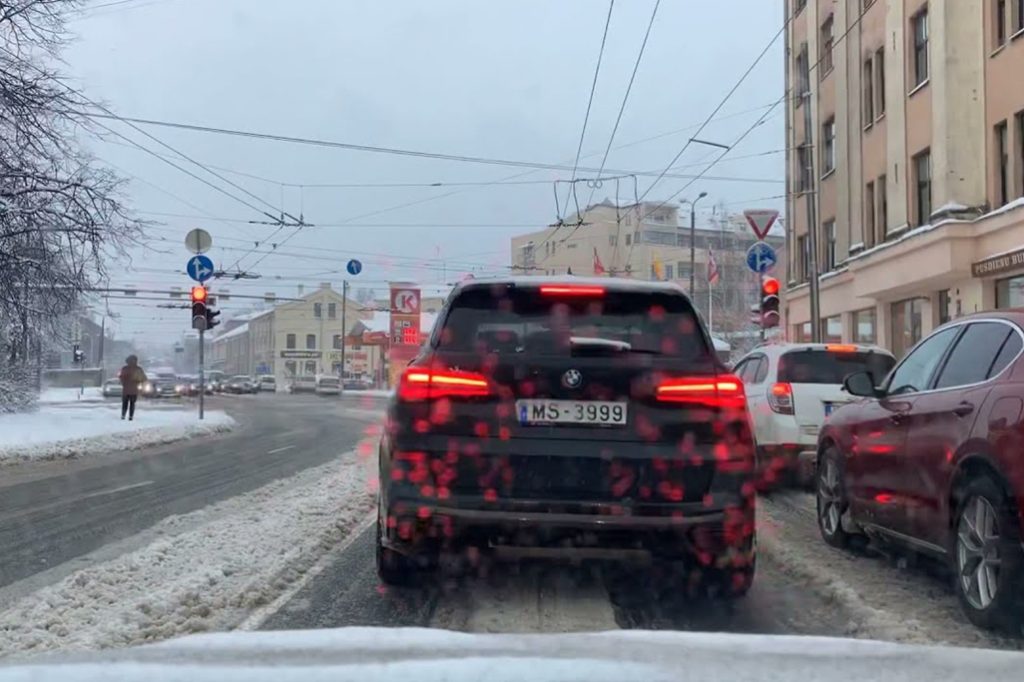
Seat belts are mandatory, children need age- and size-appropriate restraints, and handheld phone use is prohibited. Daytime running lights or dipped headlights are required even in daylight. Carry the rental agreement, identification, valid license, and insurance documentation supplied by the company.
Alcohol limits differ. Estonia has a particularly strict approach; Lithuania applies a lower limit to experienced drivers and zero tolerance to novice drivers, while Latvia has a stricter limit for novices than for experienced drivers. The simplest reliable rule for travelers is not to drink before driving.
Be especially cautious at zebra crossings, roundabouts, and tram or bus lanes. Lithuania requires drivers to yield to pedestrians waiting at marked crossings. Speed cameras are common, and fines can follow a rental car home through the rental agency.
Winter Driving: Match the Car to the Season
Cold-weather driving is the biggest seasonal change. Mandatory winter-tire periods are December 1–March 1 in Estonia and Latvia, and November 10–March 31 in Lithuania. These are minimum legal windows, not a promise of snow-free roads outside them. Ask the rental agency to confirm suitable tires for every country on your route.
In snow, leave a longer following distance, brake gently, clear all windows, and allow extra daylight driving time. Rural roads can be icy before city streets. For Estonia, the transport authority emphasizes the three-peak mountain/snowflake symbol on non-studded winter tires; do not assume any tire labeled “all-season” meets every local requirement.
Border Crossings, Parking, and Unexpected Costs
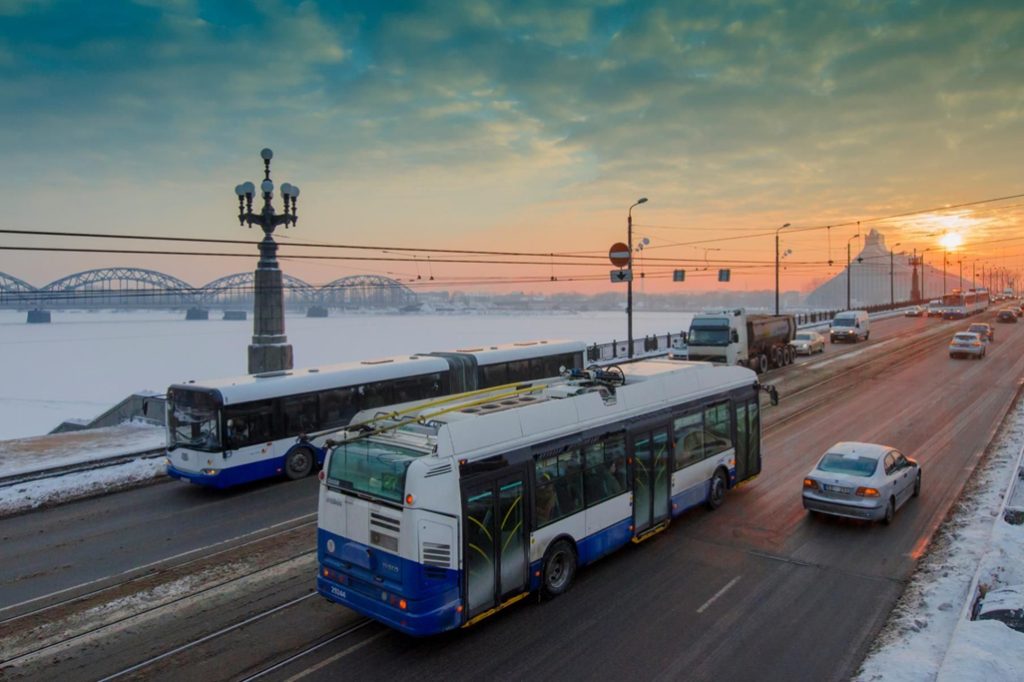
Estonia, Latvia, and Lithuania are in the Schengen Area, so the usual road trip does not involve routine internal border checks, although temporary controls are possible. Carry your travel documents anyway. A rental agreement may prohibit travel beyond approved countries, even if a navigation app suggests a shortcut.
In historic centers such as Tallinn’s Old Town, Riga’s Old Town, and central Vilnius, street parking can be limited, restricted, or paid. Read zone signs and pay using the local machine or approved parking app.
Most passenger-car roads do not require a general vignette for this three-country trip, but local fees exist. For example, entering Jūrmala’s designated paid zone in Latvia requires a permit; its posted fee is €5 from January 1, 2026. Check the official zone map and current terms before visiting.
How to Plan a Relaxed Baltic Road Trip
For a first visit, allow seven to ten days for Vilnius, Riga, and Tallinn, with extra stops rather than trying to drive every day. A sensible northbound sequence is Vilnius → the Hill of Crosses area → Riga → Pärnu → Tallinn. Add Trakai near Vilnius or Lahemaa National Park near Tallinn if time permits. Verify drive times in your navigation app and budget for breaks, roadworks, and slower coastal roads.
Choose a compact car for two travelers and mostly paved routes; prioritize luggage room for a family. An automatic may cost more or have limited availability, so reserve early. Download offline maps, save accommodations’ parking instructions.
Before You Drive: Quick Checklist
- License, passport, rental agreement, and any required IDP
- Written cross-border authorization and confirmed insurance
- Correct seasonal tires, headlights, warning triangle, and other required equipment
- Photos of existing damage and fuel level at pickup
- Parking plan, offline maps, emergency contact, and return instructions
Frequently Asked Questions
Can I rent a car in one Baltic country and return it in another?
Often, yes, but only if the supplier offers an international one-way rental. Obtain a written quote for the drop-off charge and confirm that all border crossings are permitted.
Do Americans need an International Driving Permit?
Requirements depend on the license, destination country, and rental company. A US driver should verify country-specific recognition rules before departure and carry an IDP when required; an IDP is a translation, not a substitute for a license.
Is a rental car worthwhile for Tallinn, Riga, and Vilnius only?
Usually not for city-only stays: walking and public transportation can be simpler. A rental car becomes more valuable when adding countryside, beaches, and multiple stops outside the capitals.
What should I do after a breakdown or accident?
Move somewhere safe if possible, use hazard lights, and contact the rental company immediately. Call 112 for emergencies throughout the EU. Do not authorize repairs without the provider’s instructions.
The Bottom Line
A Baltic road trip rewards flexibility, but the smartest preparation happens before pickup. Confirm what your rental covers, respect country-specific rules, and give yourself time for unplanned stops. That makes the journey between destinations part of the experience—not a logistical headache.
