

✦ Key Takeaways
- Estonian culture blends Baltic, Nordic, and Slavic influences into a beautifully unique identity unlike anywhere else in Europe.
- The Estonian language belongs to the rare Finno-Ugric family and is closely related to Finnish — not to any Slavic or Germanic tongue.
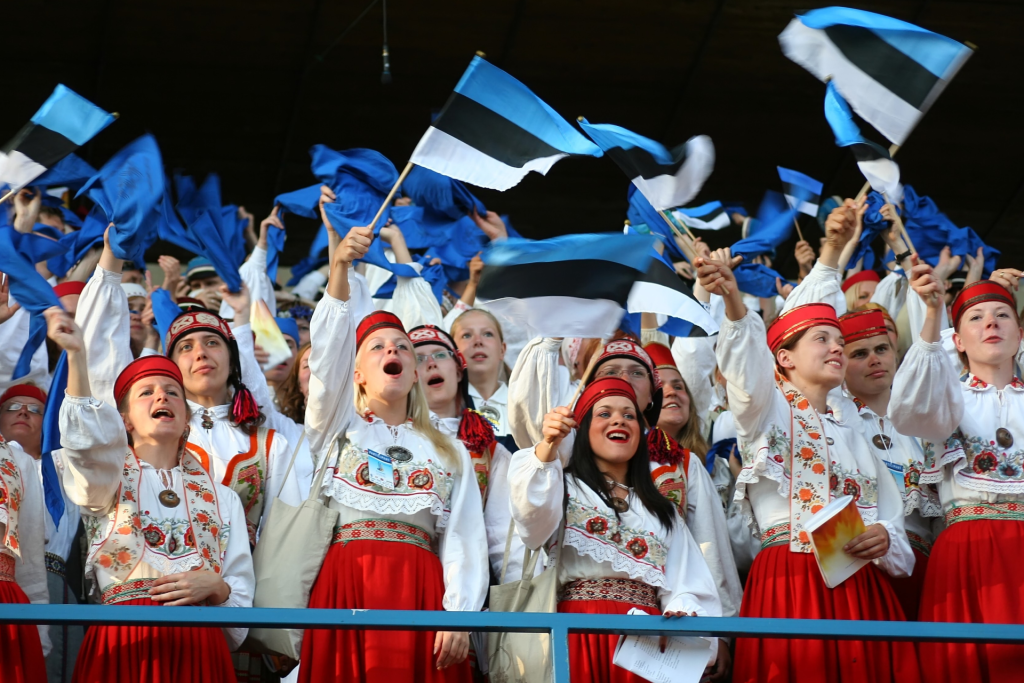
- Estonia’s Song and Dance Festival, held every five years, is a UNESCO-recognised cultural event that draws over 30,000 performers.
- Traditional Estonian clothing (national costume) varies by region and remains a powerful symbol of cultural pride worn at major festivals.
- Folklore, nature worship, and the sauna are central pillars of Estonian daily life and national identity.
- Estonia is one of the most digitally advanced nations on Earth — yet it protects ancient customs with remarkable dedication.
- Visiting Estonia is the best way to experience this living culture firsthand — from Tallinn’s medieval streets to island folk traditions.
📋 Table of Contents
- Introduction to Estonian Culture
- The Estonian People — Character and Values
- The Estonian Language
- Estonian Folklore and Mythology
- Festivals and Celebrations in Estonia
- Traditional Estonian Clothing
- Music, Song, and the Arts
- Estonian Cuisine and Food Traditions
- Religion and Spiritual Life in Estonia
- The Estonian Sauna Culture
- Family Life and Social Customs
- Modern Estonia — Digital Nation, Ancient Soul
- How to Experience Estonian Culture Firsthand
- FAQs About Estonian Culture
Introduction to Estonian Culture
When travellers think of Europe’s most culturally rich destinations, they often picture France, Italy, or Greece. But tucked away along the Baltic Sea sits a country that quietly holds one of the continent’s most distinctive, resilient, and deeply layered cultural identities. Estonian culture is a fascinating fusion of ancient Baltic traditions, Scandinavian sensibilities, and a fierce national spirit forged through centuries of foreign rule, Soviet occupation, and an extraordinary peaceful revolution — all led by song.
Estonia is a small country with a population of just over 1.3 million people, yet it punches far above its weight when it comes to cultural output, linguistic uniqueness, and the preservation of traditions that go back thousands of years. Whether you’re a curious traveller planning your first visit, a history enthusiast, or simply someone who loves discovering lesser-known corners of European heritage — this complete guide to Estonia’s culture, traditions, language, people, clothing, and folklore will give you everything you need.
Let’s dive deep into what makes Estonia one of Europe’s most rewarding cultural discoveries.
1.3M
Population of Estonia (2025 estimate)
5 yrs
Cycle of the Song & Dance Festival
800+
Years of recorded history in Tallinn
The Estonian People — Character and Values
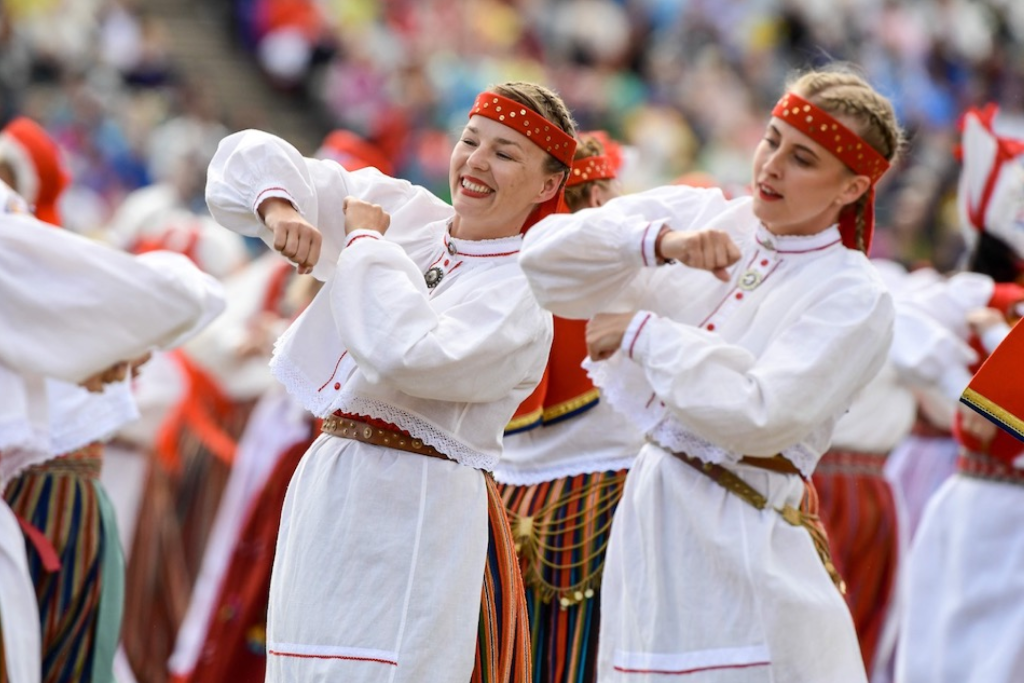
Understanding Estonian culture starts with understanding the Estonian people. Estonians are widely known for being reserved, honest, and deeply self-reliant. At first glance, a newcomer might mistake their quiet composure for coldness — but spend more than a day in their company and you’ll discover a warmth, dry wit, and loyalty that runs remarkably deep.
According to Commisceo Global’s Estonia Culture Guide, Estonians tend to speak softly, avoid emotional extremes in public, and place a high value on being rational and calm. They do not like to draw unnecessary attention to themselves — but they are intensely proud of who they are.
Key Values of the Estonian People
- Self-sufficiency: Estonians have a strong independent streak, shaped by centuries of occupation and survival. “Doing it yourself” is a deeply ingrained value.
- Honesty: Small talk is not an Estonian specialty. They say what they mean and mean what they say. This directness is not rudeness — it’s respect.
- Connection to nature: Estonia is 50% forested, and Estonians have a spiritual relationship with the land. Forest walks, mushroom picking, and berry foraging are not hobbies — they’re a way of life.
- Respect for elders: Estonian society is hierarchical in the most respectful sense. Older generations are introduced first, addressed formally, and treated with great honour.
- Cultural pride: Despite — or perhaps because of — occupation and hardship, Estonians hold their cultural identity with extraordinary tenacity.
“Estonians are not a people of grand gestures. They are a people of deep roots — and those roots run all the way down to the Baltic bedrock.”
According to Statistics Estonia, the country’s ethnic composition is approximately 65% ethnic Estonian, with Russian, Ukrainian, and Finnish communities also present. This multicultural background adds fascinating layers to the country’s social fabric.
The Estonian Language
The Estonian language is one of the most linguistically fascinating in the world — and it’s central to national identity. Estonian belongs to the Finno-Ugric language family, which places it in the same rare linguistic group as Finnish and (more distantly) Hungarian. It bears absolutely no relationship to the surrounding Slavic or Germanic languages, which makes it stand out sharply in Europe’s linguistic landscape.
Estonian is spoken by approximately 1.1 million people inside Estonia and thousands more in diaspora communities worldwide. It has been profoundly influenced by German, Swedish, Russian, and Latvian over the centuries — though it is not grammatically related to any of them.
Fascinating Features of the Estonian Language
- Estonian has 14 grammatical cases — making it grammatically complex and a genuine challenge for most language learners.
- It has no grammatical gender (no “he” or “she” — there’s only one word: tema).
- The word for “thank you” is aitäh — one of the first phrases every visitor to Estonia should learn.
- The language features a unique system of three vowel and consonant lengths (short, long, and overlong) that completely changes word meaning.
- Estonian oral tradition — songs, proverbs, and poems — played a vital role in preserving national identity during the Soviet era.
Did You Know? The Estonian national epic, Kalevipoeg (Son of Kalev), was compiled in the 19th century from ancient oral folk songs. It became a cornerstone of the National Awakening movement that ultimately helped Estonia achieve independence. You can learn more about it at the Estonian National Museum.
Explore Estonia With Experts
Ready to Experience Estonian Culture In Person?
Vytis Tours has been leading Baltic adventures for over 33 years. Let our expert guides bring Estonia’s rich culture to life on a tailor-made tour.
Read More: View Estonia Tours
Read More: Request A Free Quote
Estonian Folklore and Mythology
Few things capture the Estonian spirit as powerfully as its folklore. Estonian mythology and oral tradition stretch back thousands of years, rooted in a deeply animistic worldview where forests, rivers, stones, and fire were all inhabited by spirits. Long before Christianity arrived in the region, ancient Estonians lived within a rich cosmological framework known as the Estonian folk religion.
Ancient Beliefs and the Spirit World
Estonian folk belief centred on the idea that every natural object — a tree, a spring, a rock — had its own spirit or guardian. The metsaema (Forest Mother) and metsaisa (Forest Father) were revered protectors of the woodland. People asked permission before cutting trees, and offerings were made at sacred groves and stones known as hiied.
The Taara cult — centred on a sky god — was particularly widespread before Christianisation, and its echoes can still be found in Estonian cultural festivals today. The Estonian National Museum in Tartu has excellent permanent exhibitions dedicated to this pre-Christian belief world. Planning to visit? Our Tartu Estonia Travel Guide covers everything you need to know.
Folk Songs — Regilaul
Perhaps the most extraordinary aspect of Estonian folklore is its body of ancient folk songs, known as regilaul. These songs follow a unique alliterative verse structure unlike anything in Western European folk tradition. The Eesti Rahvaluule Arhiiv (Estonian Folklore Archives) holds over 133,000 song texts — one of the largest folk song collections in the world relative to population size, according to the Estonian Folklore Archives.
These songs tell stories of heroes, nature spirits, love, loss, and the rhythms of agricultural life. They were sung by women at spinning wheels, during field work, and at life-cycle rituals like weddings and funerals. Their survival through occupation and suppression is a testament to the resilience of Estonian cultural identity.
The Kalevipoeg — Estonia’s National Epic
Compiled by Friedrich Reinhold Kreutzwald in the 1850s from ancient oral tradition, Kalevipoeg (Son of Kalev) is Estonia’s national epic poem. The story follows a mythological giant-hero who protects his people, battles demons, and ultimately sacrifices himself for Estonia’s future freedom. The epic became a foundational cultural text during the 19th-century National Awakening — the period when Estonians first asserted a modern national identity through culture, language, and song.
Festivals and Celebrations in Estonia
Estonian traditions come spectacularly to life through the country’s calendar of festivals and celebrations. From enormous national song events to intimate village midsummer bonfires, Estonia’s festival culture reflects its soul in ways that no museum can fully replicate.
The Estonian Song and Dance Festival (Laulupidu)
This is, without question, one of the most moving cultural events in Europe. Held every five years in Tallinn, the Estonian Song and Dance Festival brings together over 30,000 performers — choirs, orchestras, folk ensembles, and dance groups — in a celebration of national identity that dates back to 1869. The event is so significant that UNESCO inscribed it on the Intangible Cultural Heritage list in 2003.
During the Soviet era, the Song Festival became a form of peaceful resistance. In 1988–1991, mass outdoor singing events evolved into what the world now calls the “Singing Revolution” — a non-violent independence movement in which Estonians literally sang their way back to freedom.
Jaanipäev — Midsummer Night
Every year on June 23–24, Estonians celebrate Jaanipäev (St. John’s Day / Midsummer). This is arguably the most beloved holiday in Estonia. People head to the countryside, build towering bonfires, sing traditional songs, dance, and stay up all night to watch the sun barely dip below the horizon. Midsummer in Estonia is magical — the nights are so short that dusk barely arrives before dawn begins again.
Other Notable Estonian Festivals
- Mardipäev (St. Martin’s Day, Nov 10): Children dress as masked figures and go door-to-door singing for treats — Estonia’s own ancient version of Halloween.
- Kadripäev (St. Catherine’s Day, Nov 25): Similar to Mardipäev, girls dress in white and visit neighbours, singing and collecting gifts.
- Old Town Days, Tallinn (June): A medieval festival that transforms Tallinn’s UNESCO-listed Old Town into a living history experience. Read our Tallinn guide to plan your visit around it.
- Tallinn Christmas Market (December): One of the oldest Christmas markets in Europe, dating to the 14th century, set in Tallinn’s magical Town Hall Square.
- Viljandi Folk Music Festival (July): A four-day open-air festival celebrating Estonian and world folk music that draws over 25,000 visitors annually. Discover more in our guide to things to do in Viljandi.
Traditional Estonian Clothing
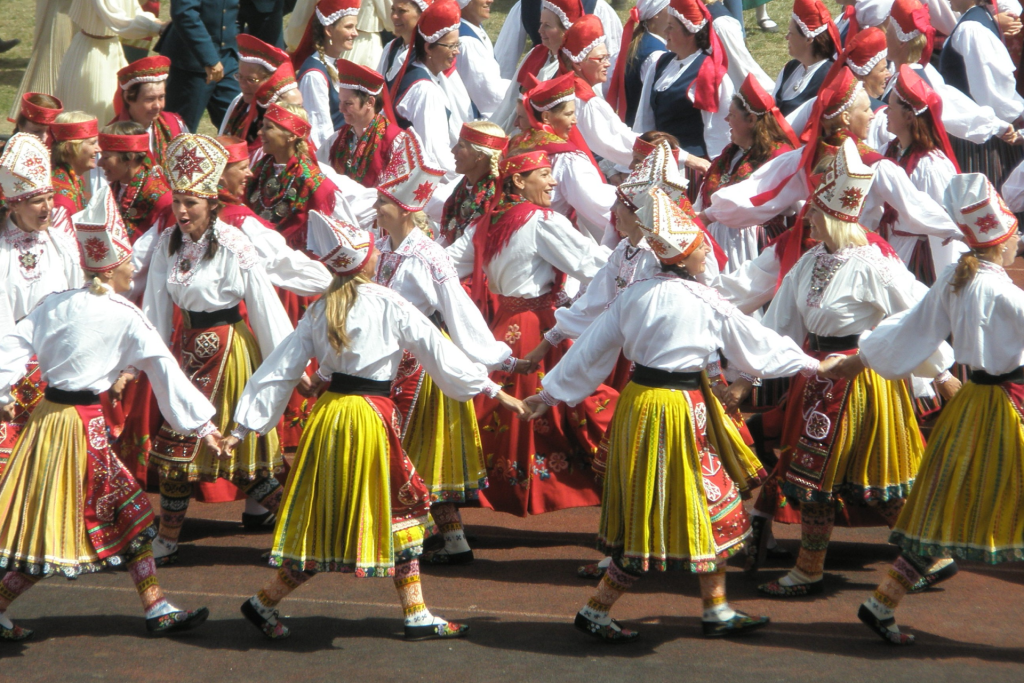
Traditional Estonian clothing is a visual encyclopedia of the country’s regional diversity, craftsmanship, and cultural pride. Estonia’s national costume (rahvariided) is not a single uniform outfit — it varies significantly by county and parish, with each region having its own distinctive colours, patterns, and embroidery styles.
Regional Variation
In Muhu Island, women’s costumes are famous for their explosively colourful embroidery — bright reds, yellows, and blues stitched onto black wool in geometric flower patterns. In Kihnu, a UNESCO-protected island community, women still wear the traditional striped wool skirts (kört) in their daily lives. In Võrumaa in southern Estonia, costumes tend toward deeper, earthier tones with intricate woven patterns.
Key Elements of Estonian National Costume
- Women’s costume: Typically includes a white linen blouse (decorated with embroidery), a woven wool skirt, an apron, a vest or jacket, a head covering (cap for married women, flower wreath for unmarried women), and elaborate silver or brass brooches called sõlg.
- Men’s costume: Consists of a linen shirt, woollen trousers or breeches, a waistcoat, a long coat, knitted socks, and a hat. The colour palette is generally more subdued than women’s dress.
- Striped fabric: Colourful stripes are a hallmark of many Estonian regional textiles and appear in skirts, blankets, and sashes.
- Handmade knitwear: Estonia has a strong tradition of intricate knitting, particularly mittens and gloves with complex patterning. Haapsalu lace is internationally recognised — explore this craft heritage on a visit covered in our Haapsalu travel guide.
National costumes are worn with immense pride at the Song and Dance Festival, folk events, and national holidays. Many Estonians own or have commissioned their own authentic regional costume — it’s considered a meaningful cultural investment, not merely a costume.
“To wear the national costume in Estonia is not a performance — it is a declaration. It says: I know where I come from, and I am proud of it.”
Music, Song, and the Arts
Music is not a pastime in Estonia — it is woven into the national DNA. The country has the highest number of choir members per capita of any nation in the world, with nearly one in ten Estonians participating in choral singing. Classical composers like Arvo Pärt — whose minimalist “tintinnabuli” style has made him one of the most performed living composers globally — have brought Estonian music onto the world stage.
Beyond classical music, Estonia boasts a thriving contemporary music scene. Visit Estonia’s official culture page highlights how the country produces internationally acclaimed artists across jazz, electronic music, and indie rock — all while nurturing ancient folk traditions through institutions like the Viljandi Culture Academy.
Visual Arts and Architecture
Tallinn’s Old Town — a UNESCO World Heritage Site — is itself a masterpiece of medieval architecture. But Estonian visual culture extends far beyond medieval towers. The country has produced significant painters, sculptors, and photographers, with institutions like the Kumu Art Museum in Tallinn (the largest art museum in the Baltic States) showcasing centuries of Estonian visual history.
Estonian craft traditions — particularly textile art, woodworking, and ceramics — remain vibrant. The annual Estonian Craft Fair in Tallinn’s Old Town brings together hundreds of artisans preserving and reinventing traditional forms. Planning to explore Tallinn’s arts scene? Our guide to things to do in Tallinn covers all the cultural highlights.
The Full Baltic Experience
Combine Estonia With Latvia & Lithuania on a Baltic Tour
Why stop at Estonia? Our Baltic States tours take you through three extraordinary cultures — Tallinn, Riga, and Vilnius — on one expertly guided journey.
Explore Baltic Tours
Baltic & Beyond
Estonian Cuisine and Food Traditions
Estonian food reflects the country’s northern landscape and seasonal rhythms. It is hearty, honest, and deeply rooted in local ingredients — rye bread, pork, potatoes, dairy, fish, wild mushrooms, and forest berries form the backbone of the traditional Estonian diet.
Iconic Estonian Foods
- Leib (Black Rye Bread): The most iconic food in Estonia. Dense, slightly sour, and made from rye sourdough, leib is eaten at almost every meal and given as a gift of welcome. It has been a staple for over a thousand years.
- Verivorst (Blood Sausage): A traditional Christmas dish made from blood, barley, and pork fat, served with sauerkraut and lingonberry jam. It sounds alarming — it tastes wonderful.
- Mulgipuder: A hearty porridge of potatoes and barley, traditionally associated with the Mulgi region of southern Estonia. Simple and deeply satisfying.
- Kama: A unique Estonian ingredient made from roasted barley, rye, oat, and pea flour. Eaten mixed with kefir or butter as a snack or breakfast — it’s a taste of ancient Estonia in every spoonful.
- Marinated herring and smoked fish: Given Estonia’s long Baltic coastline, fish plays a central role. Smoked sprats, herring, and trout are found at every market.
- Wild mushrooms and berries: Every autumn, Estonians head to the forests to forage chanterelles, porcini, and bilberries. Forest foraging is both a cultural tradition and a popular leisure activity.
Dining Culture: Estonians tend to eat their main meal at midday. Restaurant culture in Tallinn has exploded in recent years, with Estonian chefs winning international recognition for reinventing traditional ingredients with modern techniques. The Nordic-Baltic new wave of cuisine has put Tallinn firmly on the food lover’s map. For a deeper dive, read our dedicated guide to traditional Estonian food.
Religion and Spiritual Life in Estonia
Estonia is one of the least religious countries in Europe by formal affiliation — yet spiritual life runs quietly deep. According to the Pew Research Center, a significant portion of Estonians identify as non-religious or unaffiliated. Yet this should not be mistaken for spiritual emptiness — Estonians have simply internalised spirituality in their own particular way.
The largest formal denomination is the Estonian Evangelical Lutheran Church, reflecting centuries of German and Scandinavian influence. The Russian Orthodox tradition is also significant, particularly among the Russian-speaking minority. But for many Estonians, spirituality is expressed not in church but in nature — in the forest, at the water’s edge, or in the quiet contemplation of a long summer dusk.
It’s worth noting that during the Soviet era, religious practice became a form of quiet cultural resistance. Since independence in 1991, religious organisations have regained their footing and the Council of Estonian Churches plays an active role in the country’s civil society.
The Estonian Sauna Culture
No guide to Estonian traditions would be complete without a dedicated section on the sauna. The Estonian sauna (saun) is far more than a place to get clean — it is a social institution, a healing space, and a place where important conversations happen. Historically, the farm sauna was one of the most sacred spaces in Estonian rural life. Babies were born in saunas, the sick were healed there, and the dead were prepared for burial there.
The tradition of leilutamine — throwing water infused with herbs onto the sauna stones to create a fragrant, steamy heat — is an art form passed down through generations. Birch branches (viht) are soaked in warm water and used to gently slap the skin, improving circulation and releasing a fresh, forest-like scent.
The sauna remains central to modern Estonian social life. It’s common for Estonians to invite close friends and family for a sauna evening — and these sessions can last hours, punctuated by cooling dips in a lake or river, snacks, and long, relaxed conversation. UNESCO recognised the smoke sauna tradition of Võromaa in southern Estonia as Intangible Cultural Heritage in 2014.
Family Life and Social Customs
The family is the bedrock of Estonian social life. In cities, families tend to be nuclear; in rural areas, extended family networks remain strong. It is still common for newlyweds to live with parents while they establish themselves, and elderly relatives are generally cared for within the family rather than in institutions.
Greetings and Etiquette
- A firm handshake with direct eye contact is the standard greeting. Men typically initiate with women; younger people greet older ones first.
- The common greeting is tere (hello) — use it freely and it will be warmly received.
- Estonians are formal about titles until invited to use first names. Härra (Mr) and Proua (Mrs/Ms) are appropriate forms of address in formal settings.
- Punctuality is respected. Arriving late without notice is considered rude.
- If invited to someone’s home, bring flowers, wine, or chocolates. Remove your shoes at the door — it’s expected.
- Silence in conversation is not uncomfortable for Estonians. They think before they speak, and they respect others who
do the same.
Modern Estonia — Digital Nation, Ancient Soul
One of the most remarkable things about Estonia is how seamlessly it bridges the ancient and the ultra-modern. Today, Estonia is recognised globally as the world’s most advanced digital society. Nearly all government services are available online — citizens can vote, file taxes, start a company, and access medical records digitally. The country gave the world Skype, pioneered the concept of e-Residency, and consistently ranks at the top of global digital freedom indices.
99%
of government services available online in Estonia
#1
Digital society ranking in Europe (multiple indices)
1991
Year Estonia regained independence — through song
Yet this digital sophistication exists in perfect harmony with deep cultural rootedness. Estonians still forage mushrooms on weekends, sweat in smoke saunas on Saturdays, wear folk costumes at festivals, and sing ancient regilaul melodies that are older than the written word. That paradox — the world’s most digital nation is also one of its most culturally traditional — is what makes Estonian culture so endlessly fascinating.
As Visit Estonia puts it, the country is where old traditions and new ideas live side by side with remarkable ease.
How to Experience Estonian Culture Firsthand
Reading about Estonian culture is one thing. Living it — even for a week — is transformative. Here are the best ways to immerse yourself:
- Walk Tallinn’s Old Town: A UNESCO World Heritage Site, Tallinn’s medieval core is one of the best-preserved in northern Europe. Our Tallinn guide covers everything from must-see towers to the best local restaurants.
- Explore Lahemaa National Park: Estonia’s oldest national park is a masterclass in untouched Baltic nature — bogs, forests, manor houses, and fishing villages. Read our day guide to Lahemaa before you go.
- Discover Saaremaa Island: Estonia’s largest island offers windmills, a medieval bishop’s castle, and a way of life unchanged for centuries. See our guide to the best things to do in Saaremaa.
- Explore Hiiumaa Island: The quieter, wilder sister island is perfect for those seeking authentic rural Estonia. Browse our Hiiumaa travel guide for highlights.
- Visit the Estonian National Museum in Tartu: The permanent collection on Estonian cultural history is world-class. Pair it with our Tartu travel guide.
- Unwind in Pärnu or Haapsalu: These seaside resort towns combine Estonian spa culture with historic architecture. Discover Pärnu and Haapsalu through our dedicated guides.
- Trek Soomaa National Park: Estonia’s “Land of Bogs” floods every spring into a unique fifth season beloved by Estonians. Our Soomaa National Park guide shows you how to experience it.
33+ Years of Baltic Expertise
Let Vytis Tours Take You Deep Into Estonian Culture
From medieval Tallinn to the wild islands and ancient forests, our Estonia tours are crafted by people who know and love this country. Expert guides, personalised itineraries, and 33 years of experience — that’s the Vytis promise.
Explore Our Estonia Tours
See Baltic State Tours
FAQs About Estonian Culture and Traditions
What is Estonia most known for culturally?
Estonia is most famous for its Song and Dance Festival, the ancient regilaul folk song tradition, its unique Finno-Ugric language, medieval Tallinn, sauna culture, and the extraordinary peaceful independence movement known as the Singing Revolution. It’s also globally recognised as the world’s most digital society.
What language do Estonians speak?
Estonians speak Estonian, a Finno-Ugric language closely related to Finnish. It has 14 grammatical cases and is one of the most linguistically distinct languages in Europe. English is widely spoken, particularly in Tallinn and among younger generations.
What are the most important Estonian traditions?
Key Estonian traditions include Jaanipäev (Midsummer celebrations), the Song and Dance Festival, sauna culture, forest foraging, folk costume wearing, and Mardipäev / Kadripäev celebrations. Many of these have pre-Christian roots and are among the oldest living traditions in Europe.
What is traditional Estonian clothing called?
Traditional Estonian clothing is called rahvariided (folk clothing or national costume). It varies by region and is worn at folk festivals and national events. Women’s costumes typically feature embroidered blouses, striped wool skirts, and ornate silver brooches. Men’s costumes are more subdued but equally distinctive.
Is Estonia a religious country?
Estonia is one of the least religiously affiliated countries in Europe by formal metrics. However, many Estonians have a deep spiritual connection to nature, rooted in ancient animistic beliefs. The largest denomination among those who are religious is the Estonian Evangelical Lutheran Church.
What is Estonian food like?
Estonian cuisine is hearty, seasonal, and nature-based. Black rye bread is the national staple. Other key foods include blood sausage, smoked fish, wild mushrooms, berries, barley dishes, and kama. For a full breakdown, read our guide to traditional Estonian food.
Final Thoughts
Estonian culture is, in every sense, a living culture. It is not preserved behind glass in museums — although those museums are excellent — but breathed out daily in the songs people sing, the forests they walk, the saunas they heat, and the costumes they stitch by hand. Estonia’s story — of resilience, identity, and singing through oppression into freedom — is one of the most powerful cultural narratives in modern European history.
Whether you come for the medieval magic of Tallinn, the folk festival energy of Viljandi, the island traditions of Saaremaa, or simply to stand in a pine forest and listen to the silence, Estonia will leave a mark on you. The best way to understand a culture is always to experience it — and Vytis Tours is ready to help you do exactly that.
📍 More Estonia Travel Guides
Things to Do in Tallinn
A Day in Lahemaa National Park
Best Things to Do in Saaremaa
Best Things to Do in Hiiumaa
Things to Do in Viljandi
Things to Do in Haapsalu
Traditional Estonian Food Guide
Best Things to Do in Pärnu
Soomaa National Park Guide
Tartu Estonia Travel Guide
Põltsamaa Estonia Travel Guide
JP
Jessica Parker
Travel Writer & Baltic Culture Specialist
Jessica has spent over a decade exploring the Baltic States and writing about their cultures, histories, and hidden gems. She has attended two Estonian Song and Dance Festivals, learned to make leib from scratch in a Saaremaa farmhouse, and once survived a full evening in a Võrumaa smoke sauna. She writes for Vytis Tours to help travellers discover the authentic heart of the Baltic region.
