


A City That Built Its Future in Architecture
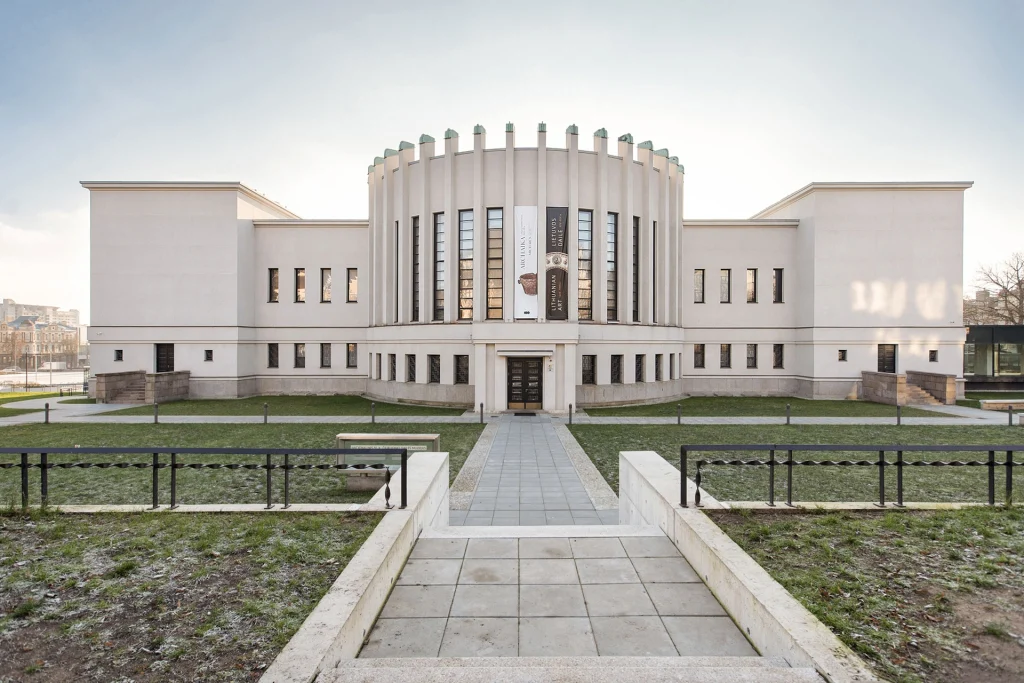
Some European cities are best understood through their medieval streets, royal palaces, or ancient fortifications. Kaunas tells a different story. Here, elegant façades, geometric windows, functional layouts, and striking public buildings reveal a period when Lithuania was shaping its identity as an independent European nation.
Between 1919 and 1939, Kaunas experienced an extraordinary transformation. After Vilnius became part of Poland during the interwar period, Kaunas served as Lithuania’s provisional capital. Government institutions, businesses, cultural organizations, and diplomatic representatives established themselves in the city. New buildings appeared throughout its expanding neighbourhoods, giving Kaunas a distinctly modern character.
Today, this architectural legacy is internationally recognized. In 2023, Modernist Kaunas: Architecture of Optimism, 1919–1939 became a UNESCO World Heritage property. The recognition celebrates more than individual landmarks. It acknowledges an urban landscape shaped by ambition, creativity, and the belief that architecture could express the future of a young nation.
For visitors, one of the most rewarding ways to experience this heritage is on foot. A walking tour through central Kaunas reveals how different architectural styles developed alongside one another, how public buildings reflected national aspirations, and how ordinary residential streets became part of a remarkable cultural story.
Whether you are an architecture enthusiast, a history lover, or a traveller exploring Lithuania for the first time, Kaunas deserves a place on your Baltic itinerary.
Why Kaunas Modernist Architecture Earned UNESCO Recognition
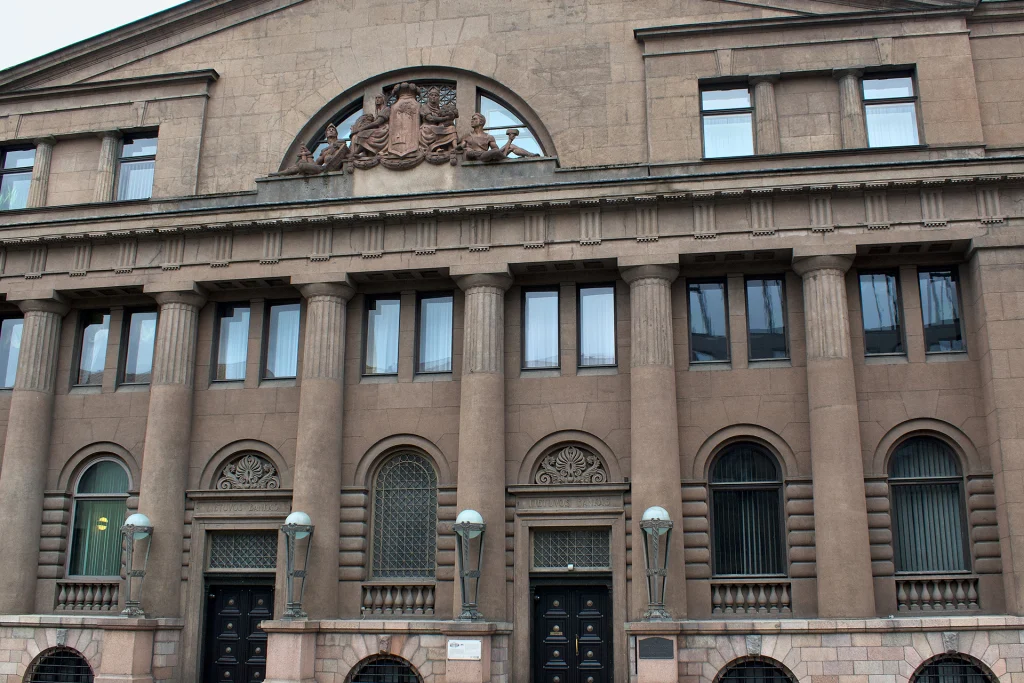
To understand the architecture, it helps to understand the circumstances that produced it.
Lithuania declared independence in 1918, and Kaunas subsequently became the country’s provisional capital. The city suddenly had to accommodate many of the functions normally associated with a national capital. Government offices, banks, educational institutions, businesses, diplomatic missions, and cultural organizations needed suitable premises.
This created an unusual opportunity for architects. Rather than simply expanding an established capital with centuries of monumental architecture, Kaunas was developing a modern urban identity within a relatively short period.
Architects brought ideas from across Europe, incorporating contemporary approaches associated with modernism, functionalism, and Art Deco. However, they did not simply reproduce foreign designs. They adapted international influences to local materials, traditions, practical requirements, and Lithuanian cultural identity.
The result was an architectural language that feels recognizably modern while retaining its own regional character.
UNESCO recognizes the historic urban landscape of Kaunas, particularly parts of Naujamiestis and Žaliakalnis. The property includes public buildings, residential architecture, streets, urban spaces, and other elements that collectively demonstrate the city’s interwar transformation. It is not simply a list of buildings or a single architectural monument.
Of approximately 6,000 surviving buildings constructed in Kaunas between 1919 and 1939, around 1,500 significant structures are located within the heritage property. Their different functions and styles demonstrate the scale and variety of the city’s development.
The UNESCO designation is therefore about understanding Kaunas as a complete urban environment: its architecture, streets, neighbourhoods, and relationship with the surrounding landscape.
For official background, visitors can explore the UNESCO World Heritage Centre’s description of Modernist Kaunas.
Before You Start: Planning Your Kaunas Walking Tour
A modernist architecture tour is best enjoyed at a comfortable pace. Unlike a visit to a single museum, exploring Kaunas involves looking carefully at building façades, noticing details, and understanding how different architectural styles relate to one another.
Most of the central landmarks can be explored on foot, particularly around Naujamiestis, the New Town. A longer route can continue towards Žaliakalnis, where the city’s changing elevation introduces another dimension to the experience.
Suggested time: Allow approximately three to four hours for a focused central walking tour. A more relaxed visit that includes interior attractions, museums, and the Church of Christ’s Resurrection may take most of a day.
Best time to visit: Late spring through early autumn generally offers comfortable conditions for walking and photographing buildings. Summer provides longer daylight hours, while spring and autumn can offer a quieter atmosphere.
What to bring: Comfortable walking shoes, a camera or smartphone, water, and a little time to explore side streets.
One important detail: not every building within the UNESCO property is open to visitors. Some remain private residences or working institutions, while others operate with scheduled opening hours or ticketed access. Many architectural highlights can still be appreciated from public streets. Check individual visitor arrangements before planning an interior visit.
The official Kaunas Modernist’s Guide is particularly useful for discovering additional buildings and streets beyond the main landmarks.
The Walking Tour: Eight Architectural Highlights of Kaunas
Stop 1: Kaunas Central Post Office – The Modern Face of a New Capital
Location: Laisvės Avenue
Begin your exploration at the Kaunas Central Post Office, one of the city’s most recognizable examples of interwar architecture.
Designed by architect Feliksas Vizbaras and completed in 1931, the building reflects the confidence of a capital that wanted to present itself as modern, organized, and culturally distinctive.
Its exterior combines a disciplined architectural composition with decorative details that give it a strong local identity. Rather than following an entirely international modernist vocabulary, the design incorporates references to Lithuanian artistic traditions.
The building is especially interesting because its architecture communicates two ideas at once: the desire to participate in modern European life and the importance of maintaining a recognizable national character.
Look closely at the façade and its arrangement of windows. Notice how the building balances decorative features with a practical institutional design.
For visitors, this is an excellent introduction to the wider architectural story of Kaunas. It demonstrates that modernism in the city was not simply about removing decoration or adopting a uniform international style. It was also about developing a local interpretation of modern architecture.
As you continue along Laisvės Avenue, pay attention to the relationship between the buildings and the pedestrian environment. The avenue is more than a convenient walking route; it is part of the wider urban setting that helps explain the city’s interwar development.
Stop 2: Pieno Centras – Architecture and Commercial Ambition
Location: Laisvės Avenue
The former Pieno Centras building offers another perspective on the development of modern Kaunas.
Designed by Vytautas Landsbergis-Žemkalnis and constructed between 1931 and 1934, it was associated with Lithuania’s milk-processing industry. Its presence reflects a period when the country was developing its commercial and industrial infrastructure alongside its political institutions.
This is one reason the building is so interesting. It represents an aspect of modernity that visitors sometimes overlook: architecture was not only used for government offices and cultural landmarks. It also supported businesses, industry, and the everyday economic life of the country.
The building’s design communicates a sense of order and practicality. Its composition, façade, and window arrangement reflect the functional approach that influenced much of the architecture created during the interwar period.
As you examine it, consider how different this building’s original purpose was from that of a museum, church, or government institution. Yet it contributes just as meaningfully to the story of Kaunas’s transformation.
The former Pieno Centras building also demonstrates how the ambitions of a young state extended into commercial life. Modern architecture became a visible expression of economic confidence and a desire to participate in the wider European market.
Stop 3: Kaunas Garrison Officers’ Club – A Statement of Civic and Military Life
Location: A. Mickevičiaus Street
The Kaunas Garrison Officers’ Club, also known as the Military Officers’ Club, offers a more elaborate architectural experience.
Constructed between 1931 and 1937, the building was designed by a group of architects, including Stasys Kudokas, Elmar Lohk, Herbert Johanson, and other contributors.
Its importance goes beyond its exterior appearance. The building was created as a social and institutional centre for the military officers of independent Lithuania. It reflects the role of national institutions in the life of the young republic.
Compared with the more restrained appearance of some modernist buildings, the Officers’ Club incorporates a richer combination of architectural and decorative elements. It illustrates how modernism could accommodate formal representation and ceremonial functions without losing its contemporary character.
When viewing the building, notice the composition of its exterior and the way its architectural details establish a sense of importance.
If access is available, an interior visit can offer another layer of understanding. However, visitors should check current opening arrangements rather than assume that every part of the building is accessible.
The Officers’ Club is a reminder that the architecture of interwar Kaunas was shaped by different institutions, each with its own identity and requirements.
Stop 4: Vytautas the Great War Museum – Architecture and National Memory
Location: K. Donelaičio Street
The Vytautas the Great War Museum provides an important connection between architecture and Lithuanian history.
Together with the National M. K. Čiurlionis Museum of Art, the building forms part of a significant cultural and institutional setting in central Kaunas.
The museum complex was developed during the interwar period, when Lithuania was establishing institutions that could preserve its history, celebrate its cultural achievements, and strengthen a shared national identity.
Its architectural character reflects the importance of public buildings during this era. The design is formal and carefully composed, communicating the significance of the institution it houses.
A visit to the War Museum can add considerable context to an architectural walking tour. Its collections help visitors understand the historical experiences that shaped modern Lithuania, including the country’s independence movement and military history.
Even if you do not enter the museum, the surrounding area is worth exploring. Observe how the museum buildings relate to nearby public spaces and other cultural institutions.
This stop also helps explain why Kaunas developed such a concentrated collection of important public architecture. The city was not simply constructing offices and commercial premises. It was building the institutions of a modern state.
Stop 5: Bank of Lithuania Building – Confidence in a Modern Economy
Location: Maironio Street
A country’s capital requires more than government buildings and cultural institutions. It also needs the financial infrastructure to support its economy.
The Bank of Lithuania building is an important part of Kaunas’s interwar architectural landscape. Its presence reflects the economic ambitions of the independent Lithuanian state and the importance of establishing modern financial institutions.
The building’s architectural character fits within the wider modernist environment of the city. Its formal appearance and institutional purpose communicate stability, organization, and confidence.
For architecture enthusiasts, this stop offers an opportunity to consider how modernism was applied to different types of public and professional buildings.
The architectural language of Kaunas was not limited to one particular function. It appeared in banks, offices, cinemas, residential buildings, educational institutions, and religious architecture.
This variety is one of the reasons the city’s UNESCO recognition is so meaningful.
As you move through the surrounding streets, look for the contrast between large institutional façades and smaller residential buildings. Both contribute to the character of the urban environment.
Stop 6: Romuva Cinema – A Glimpse into Interwar Entertainment
Location: Laisvės Avenue
Architecture is often associated with politics, business, and public institutions, but it also reflects how people lived and spent their leisure time.
Romuva Cinema provides an interesting look at this more everyday side of modern Kaunas.
Opened in 1940, around the end of the interwar period, Romuva became an important part of the city’s cultural life. Its design reflects the modern entertainment culture that was developing across Europe during the early twentieth century.
Cinemas were increasingly becoming important urban destinations. They represented changing lifestyles, new technologies, and the growing popularity of mass entertainment.
Romuva’s location along Laisvės Avenue makes it a natural addition to an architectural walk. It helps visitors imagine how the avenue functioned as a place for shopping, socializing, cultural activities, and everyday movement.
If the cinema is open, check whether a screening or cultural event is taking place. Experiencing a historic cultural venue from the inside can make the visit more memorable.
For those interested in the relationship between architecture and society, Romuva demonstrates that modernism was not only an aesthetic movement. It was also connected to changing patterns of urban life.
Stop 7: V. Putvinskio Street – Discovering Modernism Beyond Famous Buildings
Location: V. Putvinskio Street
One of the most rewarding parts of exploring Kaunas is leaving the main avenues and spending time in its residential neighbourhoods.
- Putvinskio Street is particularly valuable for this reason. During the interwar period, foreign diplomatic representatives and institutions were located along this street, making it an important part of the city’s international character.
The street also provides an opportunity to see how modernist ideas were expressed in residential architecture.
Look for the differences between individual houses: their façades, balconies, window arrangements, entrances, and overall proportions. Some buildings are restrained and geometric, while others incorporate more decorative elements.
These variations reveal how architects interpreted modernism according to the requirements of individual clients and buildings.
The residential architecture of Kaunas is especially important because it prevents the city’s heritage from being reduced to a handful of famous monuments. The UNESCO property recognizes an urban environment in which ordinary buildings and public spaces help explain the wider architectural transformation.
This is also an ideal section of the walk for photography. Rather than focusing only on entire buildings, look for details such as staircases, entrance doors, balconies, and decorative features.
Take your time here. Some of the most interesting architectural discoveries in Kaunas are found along streets that visitors might otherwise pass without noticing.
Stop 8: Church of Christ’s Resurrection – Modernism Above the City
Location: Žaliakalnis
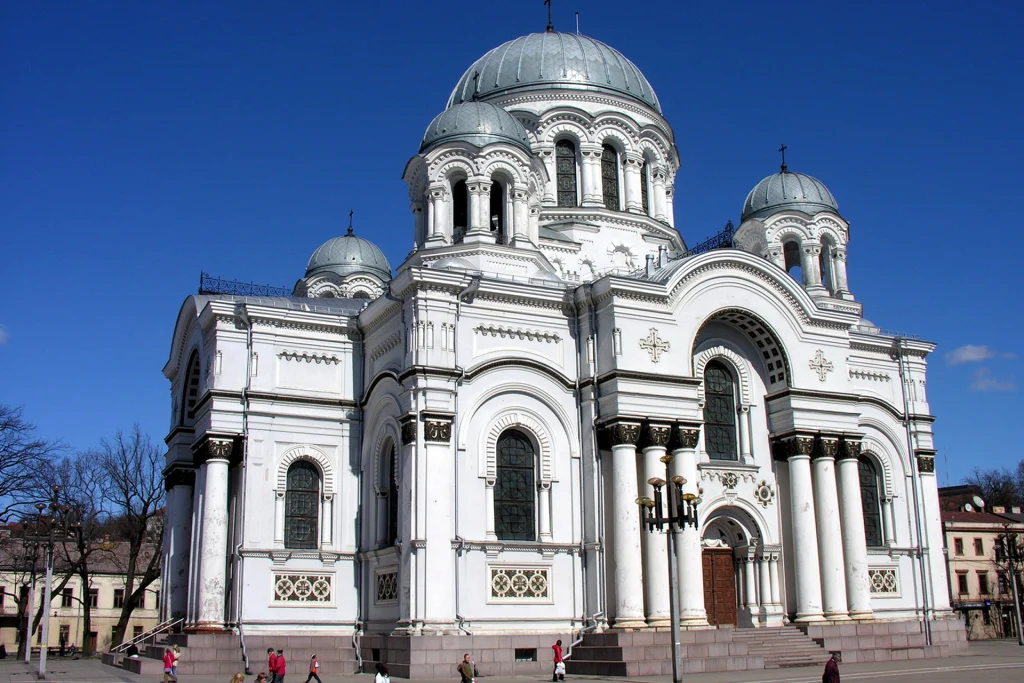
End the architectural journey at the Church of Christ’s Resurrection, one of the most distinctive landmarks in Kaunas.
Its construction began in 1933, under the direction of architect Karolis Reisonas, but historical circumstances delayed its completion. The building was completed in 1940, just as the political situation in Europe was changing dramatically.
The church was intended as a national sanctuary, reflecting the importance of religion, identity, and independence in Lithuanian society.
Its appearance is strikingly different from that of a traditional medieval church. The strong vertical composition, monumental scale, and restrained modernist forms give it a distinctive presence above the city.
The building is particularly valuable because it demonstrates how modernist principles could be applied to religious architecture. It does not imitate a Gothic cathedral or reproduce the decorative language of earlier church design. Instead, it presents a modern interpretation of a spiritual landmark.
The church also provides a geographical perspective on Kaunas. Its elevated position in Žaliakalnis allows visitors to appreciate the city’s topography and its relationship with the surrounding landscape.
If the church is open, consider exploring the interior. Depending on current visitor arrangements, access to the upper levels may also be available. Check opening hours and any applicable admission arrangements before visiting.
For many visitors, this is an appropriate final stop because it brings together several themes that define modernist Kaunas: national identity, architectural experimentation, religious life, and the ambition to create a modern city.
What Makes Kaunas Modernism Different?
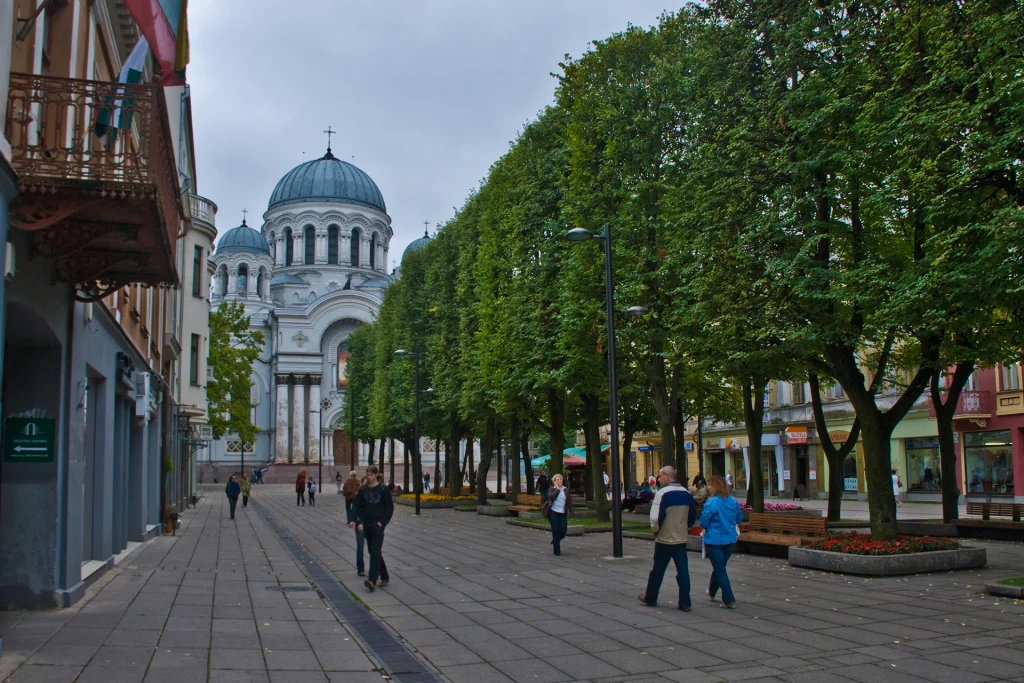
After exploring the main landmarks, it becomes easier to recognize the architectural characteristics that connect them.
However, Kaunas modernism should not be understood as a single rigid style. The city developed its own architectural language by combining international ideas with local conditions and cultural influences.
1. Functional Design
Many buildings reflect the modernist belief that architecture should respond to practical needs.
The arrangement of rooms, windows, entrances, and circulation spaces was often designed around the purpose of the building. This is especially visible in institutional and commercial architecture.
2. Geometric Forms and Clean Lines
Straight lines, balanced proportions, simplified façades, and geometric shapes appear throughout the city’s interwar architecture.
These characteristics give many buildings a modern appearance while allowing for considerable variation in detail.
3. Art Deco and International Influences
Kaunas architects were influenced by developments taking place across Europe. Art Deco, functionalism, and broader modernist ideas contributed to the city’s architectural vocabulary.
Rather than copying one movement, local architects adapted different influences to suit the needs of the city.
4. A Distinctive Lithuanian Identity
Perhaps the most interesting characteristic is the way modern architecture was connected to national identity.
Some buildings incorporated decorative details inspired by local traditions, while others expressed the ambitions of an independent country through their scale, function, and design.
This balance between international modernity and local character is central to understanding why Kaunas is internationally significant.
Beyond the Walking Tour: Discover More of Kaunas
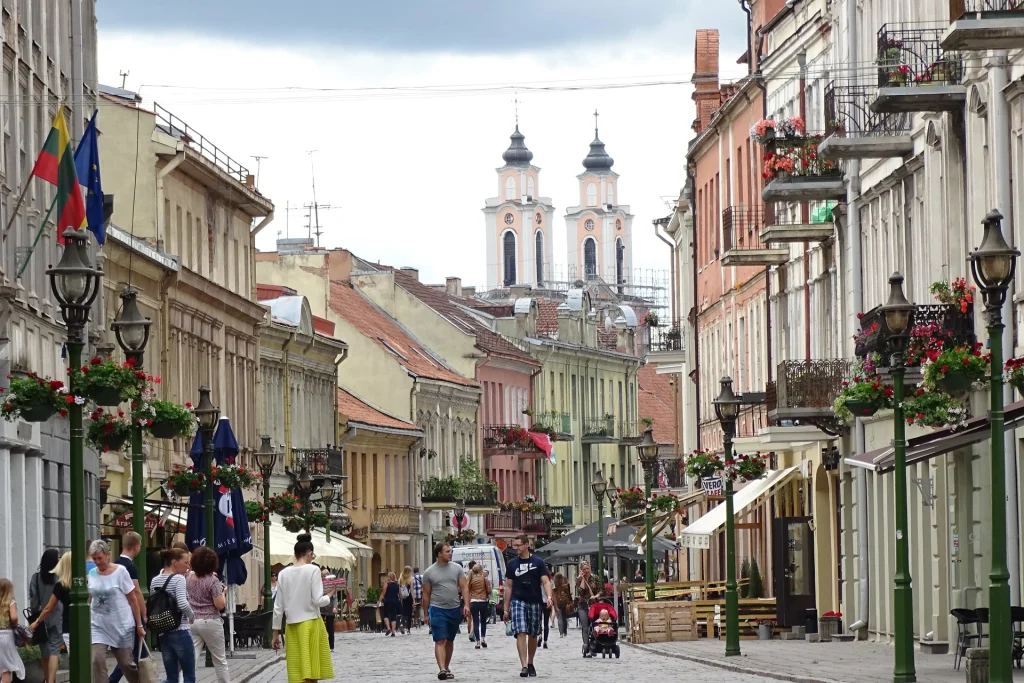
Although modernist architecture is one of the city’s defining attractions, Kaunas offers plenty of reasons to extend your visit.
After exploring Naujamiestis and Žaliakalnis, consider spending time in the historic Old Town. Its cobbled streets, traditional buildings, and atmospheric squares provide an interesting contrast with the modernist architecture found elsewhere.
Kaunas Town Hall Square is a particularly pleasant place to begin exploring the older part of the city. Nearby, Kaunas Castle offers another perspective on Lithuania’s medieval history.
Laisvės Avenue is also worth revisiting at a slower pace. Its cafés, shops, and pedestrian-friendly atmosphere make it a natural place to take a break after several hours of sightseeing.
For travellers interested in art and culture, the National M. K. Čiurlionis Museum of Art offers an opportunity to explore the work and legacy of one of Lithuania’s most important artists. The city’s wider museum scene provides additional context for understanding its cultural development.
If you have more time, consider exploring the surrounding region. Pažaislis Monastery, located outside the central walking area, offers a very different architectural experience and is one of the most notable Baroque landmarks in Lithuania.
The official Lithuania Travel guide to Kaunas attractions is a useful resource when planning additional activities.
How to Include Kaunas in a Wider Lithuania and Baltic Holiday
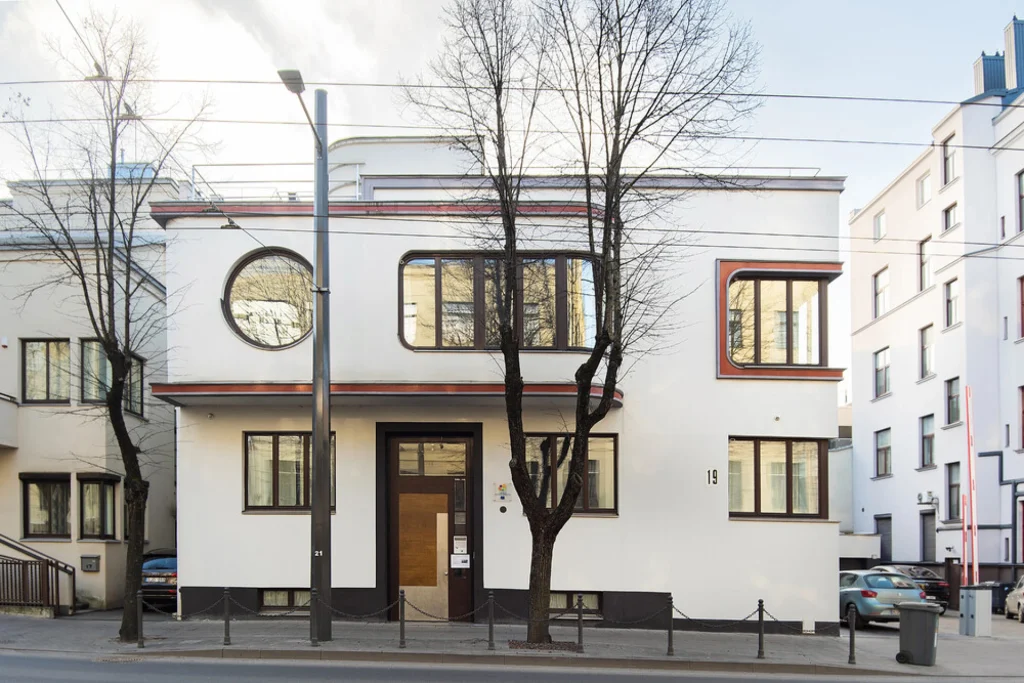
Kaunas works particularly well as part of a wider Lithuanian itinerary.
Many international visitors begin their journey in Vilnius, where the historic Old Town, churches, and cultural attractions offer an introduction to the country’s past. Travelling onward to Kaunas creates an opportunity to experience a different chapter of Lithuanian history.
The contrast between the two cities is especially rewarding. Vilnius is widely recognized for its historic architecture and medieval urban character, while Kaunas offers a remarkable concentration of interwar modernist buildings. Travellers with additional time can continue towards Klaipėda and the Curonian Spit, discovering Lithuania’s coastal heritage, natural landscapes, and maritime culture. For those planning a longer Baltic holiday, Kaunas can also be included in a journey connecting Lithuania with Latvia and Estonia.
This is where a carefully planned itinerary can make a difference. Travel times, accommodation, guided sightseeing, and the order of destinations all influence how comfortably visitors can experience the region. Vytis Tours offers several Lithuania-focused and Baltic travel options that can help travellers explore these destinations in a structured way.
For a more comprehensive Lithuanian experience, the Grand Tour of Lithuania includes a guided Kaunas city tour alongside other important destinations around the country. Travellers who prefer a shorter itinerary can explore the Lithuanian Economy Tour, which also includes Kaunas as part of its Lithuania programme. For those interested in combining several countries, the Classical Tour of the Baltic States provides another way to experience the region.
You can also browse the wider collection of Lithuania tours with Vytis Tours to find an itinerary that suits your travel interests and available time.
Frequently Asked Questions About Kaunas Modernist Architecture
Is Kaunas a UNESCO World Heritage city?
Kaunas contains a UNESCO World Heritage property titled Modernist Kaunas: Architecture of Optimism, 1919–1939. The designation recognizes a historic urban area that includes parts of Naujamiestis and Žaliakalnis, along with significant buildings, streets, and public spaces.
How long does a Kaunas modernist architecture walking tour take?
A focused walking tour of the central landmarks can take approximately three to four hours. Visitors who want to explore museums, enter selected buildings, and continue towards the Church of Christ’s Resurrection should allow additional time.
Can you explore Kaunas modernist architecture without a guide?
Yes. Many of the most recognizable buildings can be viewed from public streets, making independent exploration possible. Official visitor guides and architectural maps can help you identify landmarks and understand their historical importance.
However, a knowledgeable local guide can provide additional context about the architects, historical events, and social changes behind the buildings.
Which modernist buildings should you not miss in Kaunas?
Some of the most important landmarks include the Central Post Office, former Pieno Centras building, Kaunas Garrison Officers’ Club, Vytautas the Great War Museum, Bank of Lithuania building, and Church of Christ’s Resurrection.
Residential architecture along V. Putvinskio Street is also worth exploring.
Is Kaunas worth visiting for architecture lovers?
Absolutely. Kaunas offers an unusually concentrated collection of interwar modernist architecture, with examples ranging from government institutions and commercial buildings to residential properties and religious landmarks.
Its UNESCO recognition makes it particularly interesting for visitors who want to understand how architecture reflects national identity and historical change.
Can Kaunas be visited on a day trip from Vilnius?
Yes. Kaunas can be visited as a day trip from Vilnius, although an overnight stay allows for a more relaxed experience. Visitors interested in modernist architecture may appreciate having enough time to explore both Naujamiestis and Žaliakalnis without rushing.
Are all UNESCO-listed modernist buildings open to visitors?
No. The UNESCO property covers an urban area rather than a collection of buildings that are all managed as visitor attractions. Some buildings are open to the public, while others are private residences or working institutions. Always check access arrangements before planning an interior visit.
Discover the Architectural Story of Lithuania with Vytis Tours
Kaunas offers a fascinating reminder that a city’s identity is not shaped by history alone. It is also expressed through its streets, buildings, public spaces, and the ambitions of the people who created them.
Walking through its modernist neighbourhoods provides an opportunity to understand Lithuania during one of the most important periods in its modern history. From the Central Post Office and Pieno Centras to the residential streets of Žaliakalnis, every stop reveals another part of the story.
For travellers planning a visit to Lithuania, Kaunas is more than a convenient stop between destinations. It is a cultural experience that deserves time and attention.
Whether you are interested in architecture, history, art, or discovering the character of the Baltic States, exploring Kaunas can add a meaningful dimension to your journey.
Explore the Lithuania travel experiences offered by Vytis Tours and discover how Kaunas can become part of a memorable Baltic holiday.
