

The Singing Revolution was a largely nonviolent movement, 1987 to 1991, in which Estonians, Latvians, and Lithuanians used mass singing and peaceful protest to restore independence from the Soviet Union. Its most famous moment, the Baltic Way on 23 August 1989, linked about two million people in a chain roughly 675 kilometers (420 miles) long, from Tallinn through Riga to Vilnius.
Song was not decoration. It was the organizing tool and the shared language of protest.
Why singing? The question every visitor asks first
Open calls for independence could be punished. Flags were banned and patriotic songs censored. Choirs, however, were part of official cultural life, and song festivals, dating from the 19th century, were too rooted to erase.
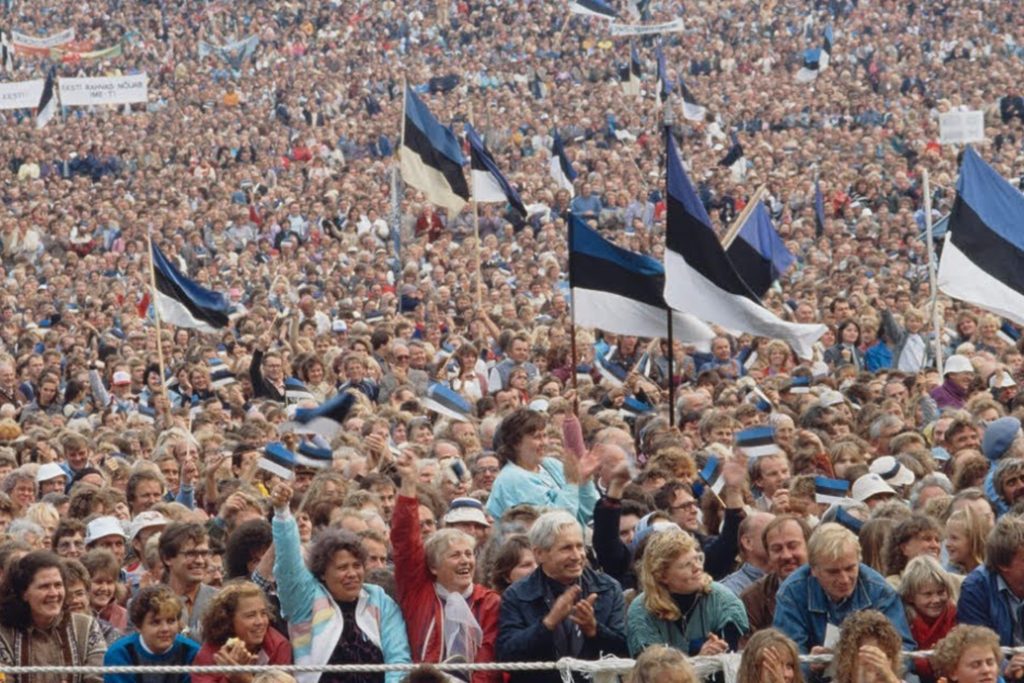
That created an opening. A choir of thousands could sing a forbidden song in a way a lone speaker could not. The crowd became performers and protesters. In 1988, activist Heinz Valk described a nation making its revolution by singing and smiling, and the name stuck.
The song also crossed generations and borders. Grandparents knew the folk repertoire, rock musicians wrote new patriotic songs, and radio coordinated people who had never met.
What came before: occupation in brief
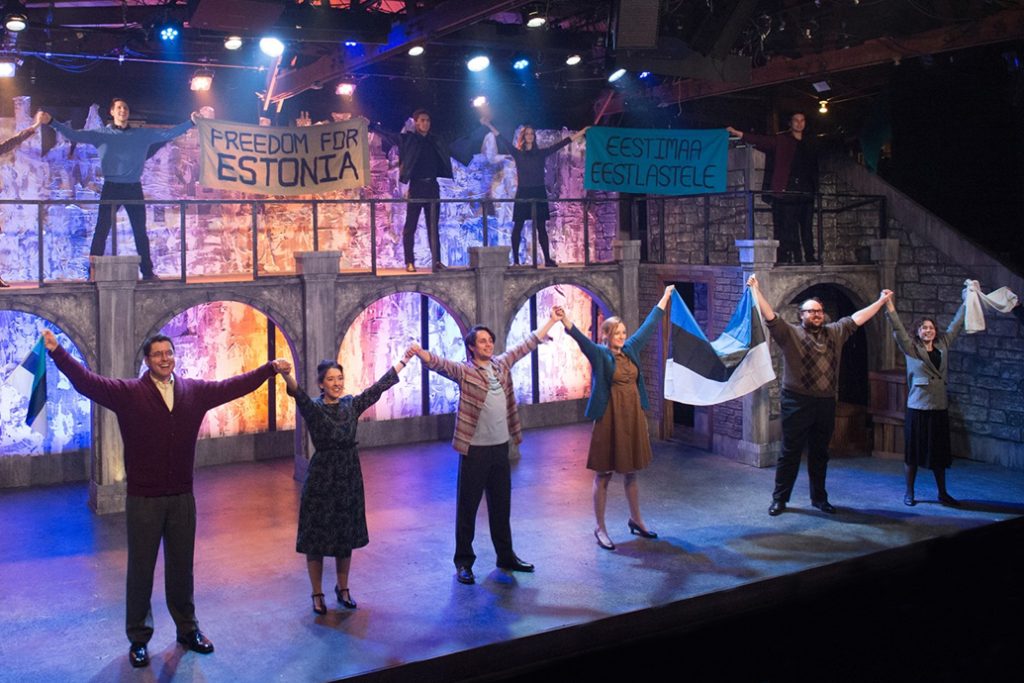
Estonia, Latvia, and Lithuania were independent between the world wars. Under secret protocols in the Molotov-Ribbentrop Pact of 23 August 1939, they were assigned to the Soviet sphere. The Soviet Union annexed them in 1940. Nazi occupation followed, then Soviet occupation resumed until 1991.
Those decades brought deportations to Siberia in 1941 and 1949, executions, censorship, and Russification. Many Western governments never recognized the annexation as legal. That mattered: Baltic leaders later argued they were restoring independence, not seceding.
Read More: Where Is Lithuania Located?
Timeline: from song festivals to restored independence
Date | What happened |
1869 | First Estonian Song Festival, in Tartu. Latvian and Lithuanian traditions also grow. |
1987 | Early mass protests mark deportations and call for openness and change. |
1988 | Singing breakthrough. On 11 September, about 300,000 people gather at Tallinn Song Festival Grounds for the Song of Estonia. Popular Fronts form in all three countries. |
23 Aug 1989 | The Baltic Way, on the pact’s 50th anniversary. About two million people hold hands across three countries. |
1990 | Pro-independence movements win elections. Lithuania declares restored independence on 11 March, Latvia on 4 May. |
Jan 1991 | Soviet forces attempt to reassert control. Fourteen civilians are killed at Vilnius TV Tower. In Riga, unarmed volunteers defend key buildings from behind barricades. |
Aug-Sep 1991 | After the failed Moscow coup, Estonia and Latvia declare full restoration in August. The Soviet Union recognizes Baltic independence on 6 September. |
The Baltic Way, explained properly
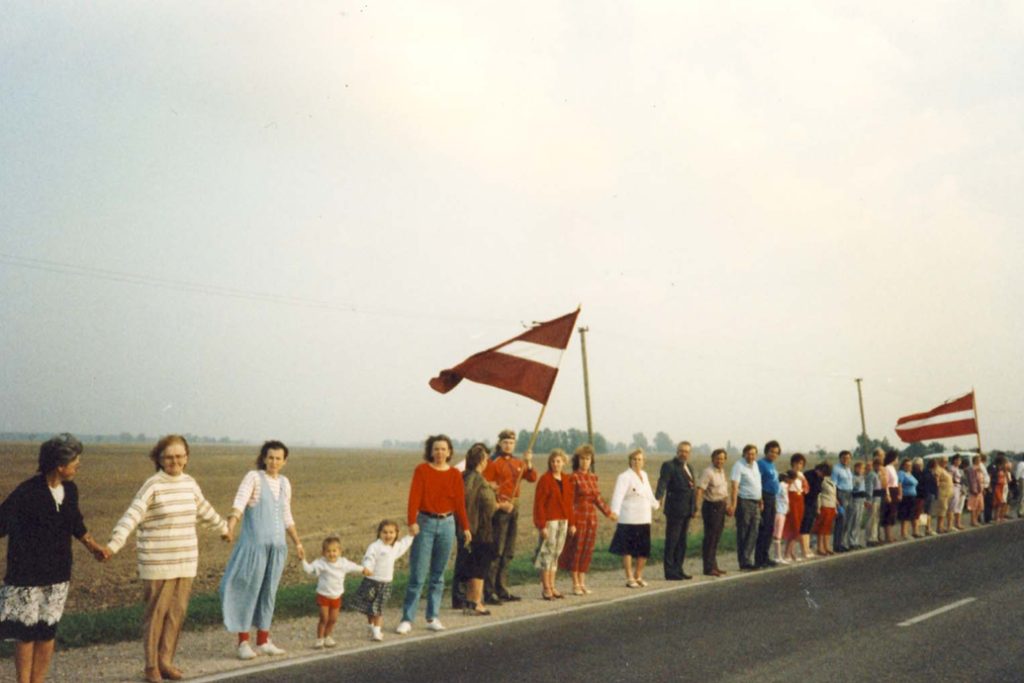
The Baltic Way, or Chain of Freedom, is hard to grasp until you do the math. Two million people was about a quarter of the Baltic population. Organizers assigned road sections, buses filled rural gaps, Estonia made it a public holiday, and radio aligned timing. People held hands for about 15 minutes.
The date was the message. Fifty years earlier, the pact that led to occupation had been signed. Choosing that anniversary forced a secret history into world headlines, in one peaceful line cameras could show across three nations.
In 2009, UNESCO added Baltic Way records to its Memory of the World Register. Freedom Square in Tallinn, the Freedom Monument in Riga, and Cathedral Square in Vilnius are all points on that chain.
Trending Adventure Tour Vacation Package : ADVENTURE TOUR OF THE BALTICS
Three countries, not one identical story
Estonia’s story foregrounds song festivals. Latvia’s centers on its Popular Front, Daugava embankment gatherings in Riga, and the Barricades. Lithuania, led by Sajudis, declared first, in March 1990, and paid the highest price in January 1991.
Cooperation was strategic as well as symbolic, celebrated in a trilingual song about three Baltic sisters awakening. Three republics acting together were harder for Moscow to isolate.
January 1991: why the story is not only joyful
It was not bloodless. In Vilnius on 13 January 1991, Soviet troops killed 14 unarmed civilians defending the TV Tower. In Riga, from 13 to 27 January, volunteers held barricades of lorries, logs, and concrete around parliament, radio, and bridges in freezing weather. Several people were killed, including in OMON attacks.
That is why memorials feel personal. Many guides have parents or grandparents who sang in a crowd or stood on a barricade. Treat the subject as a living memorial.
Did singing alone cause independence?
No. Singing created participation and legitimacy. Elections, legal arguments, Soviet crisis, the failed August 1991 coup, and international recognition turned that into statehood.
Without a way for hundreds of thousands to act together, safely enough to join and often enough to sustain, the political steps would have had far less force.
Trending New Year Vacation Package : New Years in Riga December 4 Days / 3 Nights
Where to see it today
City | Place to go | What it helps you understand |
Tallinn | Song Festival Grounds (Lauluväljak); Vabamu Museum | Stand where crowds sang in 1988. Vabamu tells personal occupation stories. |
Riga | Freedom Monument; Occupation Museum; Barricades Museum | Unveiled in 1935, the monument became a rallying point. The Barricades Museum sits in the defended Old Town streets. |
Vilnius | TV Tower memorial; Museum of Occupations and Freedom Fights | See where January 1991 turned deadly, around the former KGB headquarters. |
All three | Song and Dance Celebrations | The living festival tradition itself, recognized by UNESCO as Intangible Cultural Heritage. |
Check opening days, as several museums close on Mondays. Allow 90 minutes for each occupation museum. They are detailed and emotionally demanding.
How to visit respectfully, and get more from it
- Learn one date first: 23 August 1989. It unlocks plaques, tours, and conversations in all three countries.
- Do not treat song festivals as folklore only. Ask a local what a favorite song means. The answer is often a family story.
- Take an occupation and independence walking tour in at least one capital. Where a crowd stood or a building was defended rarely shows on a map.
- Balance heavy history with living culture: a choir concert or contemporary museum shows what independence was for.
- Use the word restored for 1991 independence. It reflects the Baltic position that the pre-1940 states were occupied, not extinguished.
Frequently Asked Questions
Was the Baltic Way really 675 kilometers long?
That is the UNESCO and Baltic source figure for the Tallinn-Vilnius route via Riga, with about two million participants. Contemporary film shows the filled chain at the agreed moment.
When are the Baltic song festivals?
Each country runs its celebration on its own cycle, usually every four or five years. Dates are announced well ahead and hotels book out, so check the official festival site.
Can I join a Baltic Way commemoration?
Yes. The anniversary is marked with concerts, exhibitions, and sometimes human chains, with larger programs in milestone years.
What should I watch before a trip?
The documentary The Singing Revolution (2006) is an accessible, Estonia-focused introduction. Pair it with a museum visit in Riga or Vilnius.
Can I visit all three capitals in one trip?
Yes. Direct buses link the capitals in about four hours per leg. A week allows two nights in each and follows the Baltic Way route south.
