

Looking for amber on Palanga Beach? Your best chance is to walk the Baltic Sea shoreline after a storm has passed, when calmer waves leave seaweed, twigs, and other lightweight debris on the sand. Scan those washed-up lines for small honey-yellow, orange, or brown pieces. Go in daylight, stay out of rough surf, and remember that finding amber is never guaranteed.
Amber hunting is a memorable way to explore Palanga, Lithuania’s popular seaside resort. You need patience more than special equipment—and a few local clues can make an ordinary beach walk much more rewarding.
Why Does Amber Wash Up on Palanga Beach?
Baltic amber is fossilized tree resin, formed millions of years ago. Water and coastal currents can transport pieces along the Baltic shoreline and deposit them among plant material. In Lithuania, traditional amber hunters pay attention to the period just after storms, when currents bring seaweed and floating debris toward shore. This practice is documented by Lithuania’s national intangible cultural heritage inventory.
Not every storm produces amber, and the beach changes constantly. Rather than expecting a large gemstone in plain sight, search for small fragments mixed into natural deposits near the waterline.
When Is the Best Time to Find Amber?
The most useful conditions are often immediately after strong winds and waves begin to subside. Early morning can also be worthwhile because fewer people have searched recently and low-angle light makes damp objects easier to notice. There is no guaranteed amber season or exact wind speed that ensures a find.
Conditions | What to do |
After a storm, as waves calm | Check fresh seaweed and debris lines from a safe distance. |
Calm, clear morning | Walk slowly and look for tiny translucent pieces. |
Busy summer afternoon | Try a less crowded stretch; expect more competition. |
High surf or lightning | Skip the hunt and return when conditions are safe. |
Where to Look on Palanga Beach
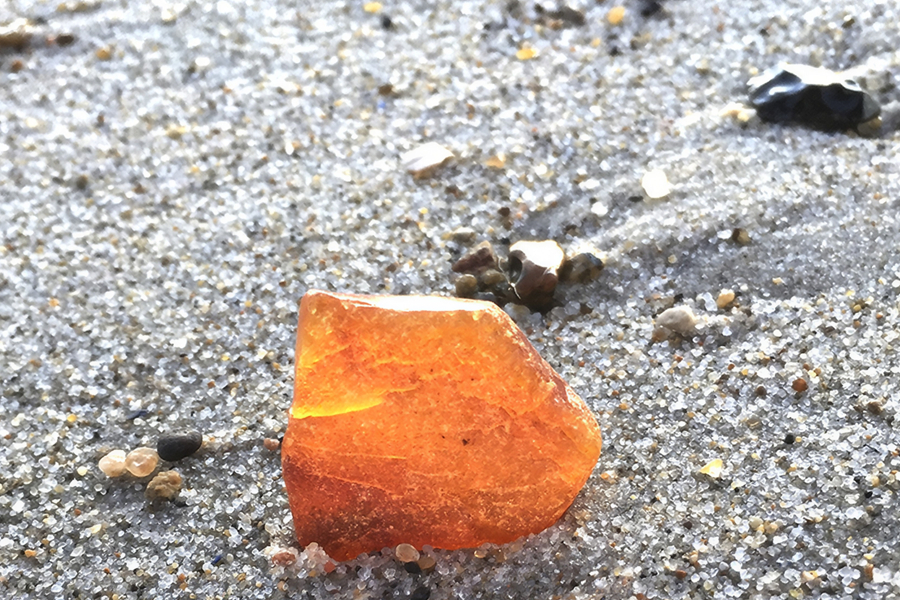
Start near the high-tide or recent wave-debris line
Look for narrow bands of seaweed, sticks, reeds, shells, and other light materials left by waves. Amber can occur among these deposits, although much of what you spot will be ordinary wood, glass, or pebbles. The wet sand around the deposits is worth checking as well.
Explore beyond the busiest central beach
The beach near Palanga Pier is easy to reach, but crowds can make a careful search difficult. Walk along an accessible stretch away from the busiest gathering points, without entering restricted dunes or protected habitats. The quieter beach near Birutė Park is another attractive place for a shoreline walk, but no specific spot guarantees amber.
How to Hunt for Amber: A Beginner’s Method
- Check the forecast and beach conditions. Plan your walk after rough weather has ended—not while dangerous waves are breaking.
- Choose a short section of shoreline. Search a manageable 100–200 meters carefully instead of rushing several miles.
- Follow the washed-up debris. Focus on pockets where seaweed and twigs collect, especially in fresh deposits.
- Look small. Many finds are no bigger than a pea. Scan for warm amber tones, but do not dismiss darker fragments.
- Pick up possible pieces and examine them in daylight. A small reusable container keeps your finds separate from sand and shells.
- Recheck promising patches from a different angle. Wet surfaces, shadows, and changing sunlight can hide fragments in plain sight.
For a casual hunt, sturdy shoes, weather-appropriate clothing, and a small container are enough. Professional amber hunters sometimes use scoop nets in surf, but beginners should not copy this technique in strong waves.
How Can You Tell Real Amber from Glass or Plastic?
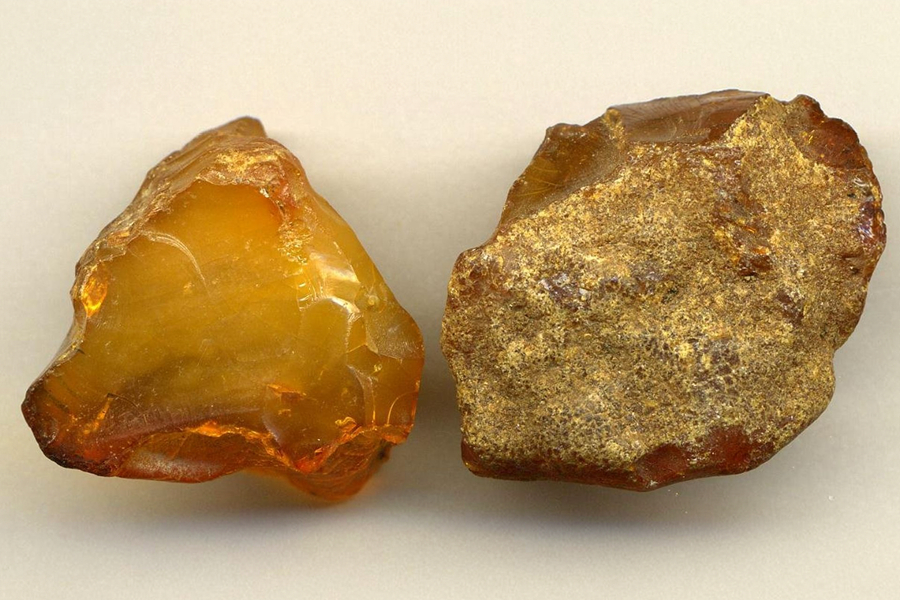
Raw Baltic amber may feel surprisingly light and relatively warm to the touch compared with an equally sized stone. Its color ranges from pale yellow to reddish brown, and it can be transparent, cloudy, or nearly opaque. These are clues—not proof of authenticity.
Inspect the surface and shape: natural pieces are often irregular and weathered. Glass typically feels heavier and colder, while modern plastic can imitate amber convincingly. Avoid burning, heated-needle, or chemical tests: they can damage specimens and create unpleasant fumes. If a find matters to you, ask an experienced amber specialist or museum educator for help identifying it.
Safety and Responsible Beachcombing
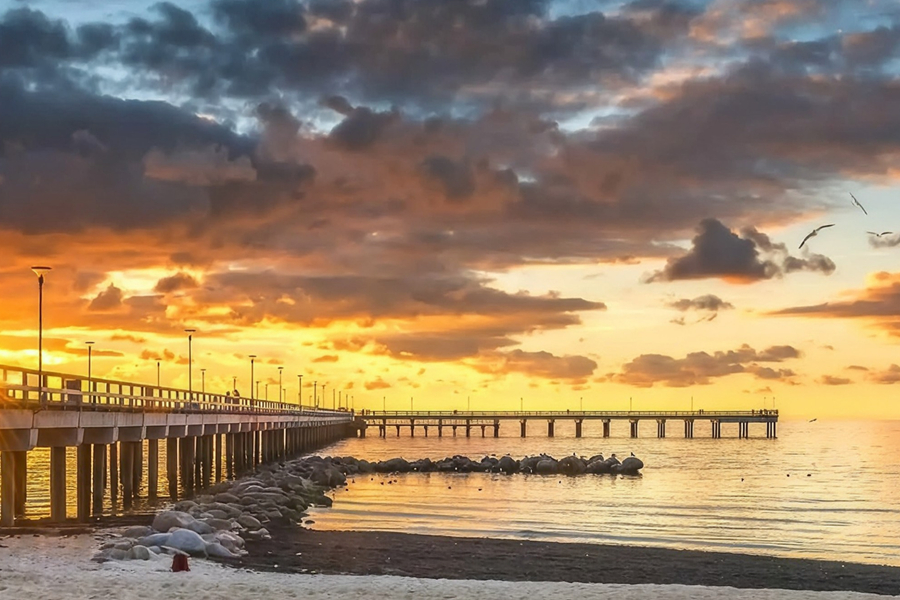
Stay on publicly accessible beach areas and respect local signs. Never walk onto dunes to reach a promising patch, disturb wildlife, dig into protected terrain, or enter dangerous surf. After storms, watch for strong currents, slippery debris, exposed objects, and sudden waves. Children should search with an adult and avoid putting small finds in their mouths.
Take only small loose pieces where collection is permitted; restrictions may apply in protected areas. Ask the Palanga Tourism Information Center about any current local rules if you are unsure. Leave plants, dune vegetation, and the beach itself undisturbed, and carry away any litter you bring.
Make It a Half-Day Palanga Experience
Begin with a relaxed morning shoreline search, then walk through Birutė Park to the Palanga Amber Museum. Housed in the historic Tiškevičiai palace, the museum displays Baltic amber, inclusions, and artifacts that help explain why this material matters to Lithuania. Its official website publishes current hours and admission prices; check before visiting.
For an even more hands-on introduction, Palanga’s tourism office lists an amber workshop and gallery where visitors can learn about amber processing and crafts. This is a useful alternative if the sea leaves you empty-handed.
Quick Checklist Before You Go
- Wait until stormy weather has eased.
- Check accessible shoreline and local beach notices.
- Wear layers and comfortable, water-resistant footwear.
- Bring a small container and a charged phone.
- Search debris lines slowly; do not enter rough water.
- Treat each find as a possibility until properly identified.
Frequently Asked Questions
Can tourists find amber on Palanga Beach?
Yes. Visitors can look for naturally washed-up fragments along accessible shorelines. Success depends on recent sea conditions, patience, and luck; many walks produce no amber.
Is amber easier to find after rain or after a storm?
Storm-driven waves and currents are more relevant than rainfall alone. Search once the sea becomes calmer and fresh debris has washed ashore.
Do I need tools to search for Baltic amber?
No. A careful eye and a container are sufficient for beachcombing. Specialized nets are used in traditional amber hunting but are unnecessary—and potentially unsafe—for casual visitors.
What if I do not find anything?
Enjoy the beach and visit the Palanga Amber Museum or an amber workshop. Both offer a richer understanding of Lithuania’s “Baltic gold” without relying on a lucky find.
Final Tip
Make the experience about noticing the coastline, not collecting a valuable stone. Slow down, follow the natural debris left by gentle waves, and let a tiny amber fragment be a bonus to a great Palanga beach walk.
