

Traveling to Lithuania, Latvia, and Estonia can fit a range of budgets. Your total depends on the season, accommodation, meals, transportation, and paid activities. As a broad planning estimate, budget travelers may spend about €50–€90 per person per day, midrange travelers around €100–€190, and travelers who prefer upscale hotels and restaurants €200 or more. These are illustrative on-the-ground budgets, not live quotes, and generally exclude international flights.
All three countries use the euro, which makes cross-border budgeting simpler. Lithuania can offer good value, Riga is often competitively priced for a city break, and Tallinn accommodation may be pricier during summer and major events. These are tendencies rather than rules: a festival weekend, seaside resort, or last-minute booking can change the picture. Build your budget from actual prices for your dates, beginning with accommodation.
Read More: 30 Interesting Facts About Latvia
Estimated Daily Budget by Travel Style
Style | Daily estimate per person | Typical approach |
Budget | €50–€90 | Hostel or simple room, casual meals, public transport, some free sights |
Midrange | €100–€190 | Private room, restaurant meals, paid museums and tours |
Comfort/upscale | €200+ | Higher-end hotels, frequent dining out, guided activities |
Use these ranges as a first draft, then price the actual hotels, routes, and attractions you want. The figures can shift considerably by season and booking lead time.
1. Accommodation: Your Biggest Cost
Accommodation often takes the largest share of a trip budget. Rooms in the historic centers of Tallinn, Riga, and Vilnius are convenient but may cost more than places outside the main tourist area. Summer, Christmas markets, concerts, conferences, and other events can push rates up.
Hostels and guesthouses are useful for solo travelers, while apartments can suit families or longer stays. Compare the final cost, including breakfast, cleaning fees, parking, city taxes, and cancellation terms. A hotel a short tram or bus ride from the center may be better value than a cheaper room with poor transport connections.
Indicative Accommodation Costs by Country (Per Night)
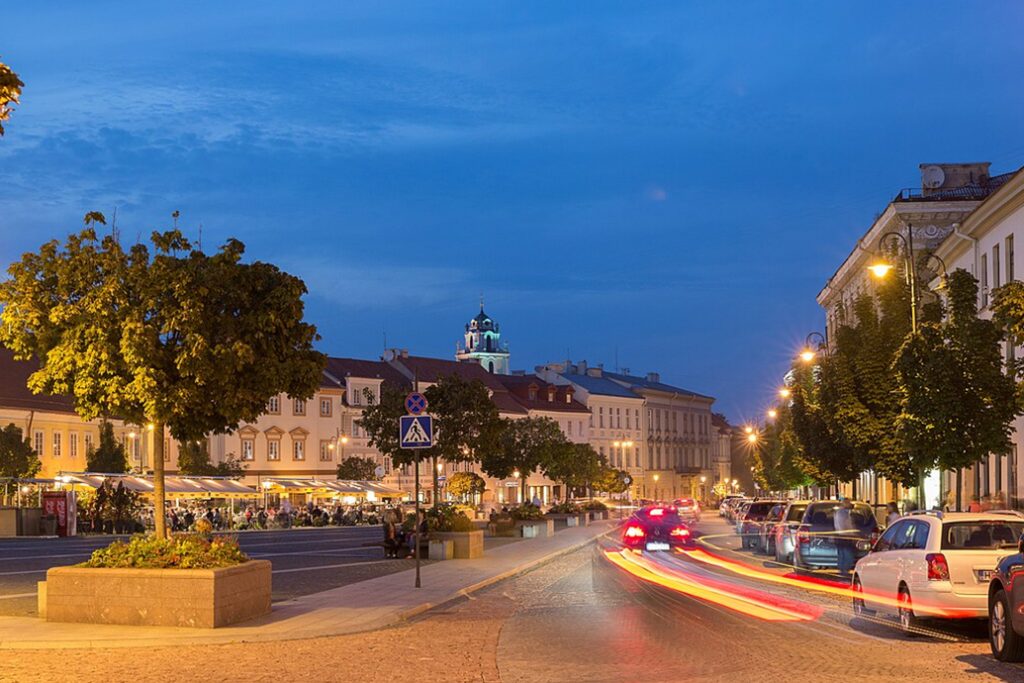
The following are illustrative 2026 planning ranges in euros, not live hotel prices. Dorm rates are per person per bed; private-room and hotel rates are per room for one or two guests. Rates vary by city, weekday, availability, events and season, and taxes or add-ons may be extra.
Destination | Hostel dorm bed | Budget private room | Midrange hotel room | Upscale hotel room |
Lithuania (Vilnius / Kaunas) | €15–€35 | €40–€75 | €65–€120 | €130–€230+ |
Latvia (Riga) | €18–€40 | €45–€85 | €70–€135 | €145–€260+ |
Estonia (Tallinn) | €22–€45 | €55–€100 | €85–€160 | €170–€300+ |
Example: a midrange double room priced at €100 costs €50 per person when two people share it, but €100 for a solo guest. Seven nights at that room rate would cost €700 per room before additional fees. If your trip lasts seven days but only six nights, calculate six hotel nights—not seven.
Accommodation extras to check before booking
Confirm tourist or city taxes, breakfast charges, cleaning or service fees, late check-in, parking, pet fees, extra beds, refundable deposits and cancellation conditions. Vilnius currently lists a €2-per-person-per-night city tax (with exemptions and differing collection arrangements); verify the final charge for each booking. Other Baltic cities may have separate local rules.
Best areas are not always the cheapest: compare walking distance to sights, night-time noise, public-transport connections and the cost of commuting. For three or more nights, an apartment with a kitchen may reduce food spending, but only if its total with cleaning fees beats the hotel alternative.
How to save on hotels
Book early if your dates are fixed, especially for summer weekends. Shoulder seasons such as spring and early fall can offer a balance of manageable crowds and prices, although weather and event schedules vary. Check whether the booking is refundable before committing.
2. Food and Drinks: Daily Meal Costs
Food spending depends on how often you dine at sit-down restaurants. A traveler choosing bakeries, groceries, and casual cafes might plan roughly €15–€30 per day; a midrange visitor may spend €30–€60 or more. Treat these as estimates and check current menus for your destination.
Use bakeries, market stalls, lunch specials, and supermarkets to balance restaurant meals. Try regional dishes such as Lithuanian cepelinai and šakotis, Latvian rye bread and grey peas with bacon, or Estonian black bread and marzipan. One special dinner can fit comfortably into a budget if other meals are simpler.
Review menus before ordering and check whether service charges are included. Tipping norms vary by venue, so avoid assuming that one fixed percentage applies everywhere.
3. Local and Intercity Transportation
City buses, trams, and trolleybuses are practical in the main urban areas. Tickets may be cheaper through an official app or travel card than onboard; check local rules and validate tickets when required. In Riga, the official tourism site lists a single public-transport ticket at about €1.50, but fares and ticket conditions can change.
For travel between Vilnius, Riga, and Tallinn, compare coach and rail services for your exact dates. Coaches often offer convenient cross-border connections; rail routes and timetables differ by corridor and may require transfers. A rental car can help with rural areas, national parks, and coastal towns, but add fuel, parking, insurance, and any cross-border restrictions.
As a rough planning allowance, set aside €5–€15 per day for local transport if you expect to ride regularly, then budget intercity tickets separately. Walking can keep costs low in compact centers, but account for transfers and distances between attractions.
4. Museums, Tours, and Things to Do
Many enjoyable activities cost little or nothing: exploring historic streets, walking along waterfronts, visiting parks, and browsing markets. Paid expenses may include museum tickets, guided tours, castles, concerts, boat trips, spa visits, and excursions to coastal areas or national parks.
A practical allowance might be €10–€30 per day for a mix of paid sights, but a guided day trip or major event can cost much more. Check museum opening days, seasonal hours, online booking requirements, and family or student discounts. Plan one or two paid highlights per day rather than paying for every activity.
5. Extra Travel Expenses That Are Easy to Forget
A practical budget should go beyond hotels, meals, local buses and entrance tickets. The allowances below are optional planning placeholders, not universally applicable charges; use current quotes for your route.
Possible extra | Suggested allowance or calculation | When it matters |
Airport transfers | €2–€30+ per transfer | Public transit versus taxi; late arrivals can cost more |
Intercity luggage / seat add-ons | €0–€20+ per journey | Depends on coach, rail or low-cost airline policy |
Travel insurance | €15–€60+ per week | Age, residence, cover and pre-existing conditions affect quotes |
Mobile data / eSIM | €5–€20+ per trip | Depends on roaming eligibility and data needs |
Tourist taxes / booking fees | Check city and property rules | May be shown only near checkout |
Laundry and toiletries | €5–€25+ per week | Useful for longer trips or hostel stays |
Day trips and special experiences | €25–€100+ per outing | Guide, boat, national park, spa or event |
Souvenirs / shopping | €20–€100+ discretionary | Set your own cap rather than assuming zero |
Car rental add-ons | Quote separately | Fuel, parking, road rules, excess and cross-border fees |
Entry paperwork / visa | Depends on nationality | Verify requirements before non-refundable bookings |
Card foreign-transaction fees, ATM charges, exchange-rate markups and missed connections also deserve a small contingency. If a card terminal offers conversion into your home currency, compare the rate with paying in euros. Check fees with your own bank.
A Realistic 7-Day Budget: What Changes the Total?

For a solo midrange traveler, the example below uses €600 for seven hotel nights, €280 for meals, €120 for transport, €120 for activities and €80 for small extras: €1,200 in total before international flights and insurance. Add €35 for an illustrative insurance policy and €15 for mobile data: €1,250. These values illustrate the arithmetic, not an all-inclusive offer. Two people sharing a €600 room divide that accommodation line; other costs are generally per person.
Trending New Year Latvia Vacation Package : New Years in Riga December 4 Days / 3 Nights The Grand Tour of Lithuania (13 Days, 12 Nights)
Which Baltic Country Is Cheapest?
Country | Budget considerations | Planning tip |
Lithuania | Can offer good value for city stays, food, and travel outside peak periods. | Compare Vilnius with Kaunas and smaller towns; coastal resorts can cost more in summer. |
Latvia | Riga offers varied accommodation and dining; event dates and Old Town location affect prices. | Look beyond the Old Town if transit connections are convenient. |
Estonia | Tallinn’s historic center may be more expensive at peak times; smaller towns can cost less. | Book summer accommodation early and consider quieter travel dates. |
There is no universal cheapest country. Hotel dates and room type can outweigh everyday price differences. Latvia’s official tourism site cites a 2025 city-cost comparison in which Riga’s selected tourist basket cost €297, compared with €299 in Vilnius and €395 in Tallinn. That basket used specific items and dates, so it is useful context—not a forecast of your own trip.
Sample Budget for a 7-Day Baltic Trip
Here is an example for one traveler on a midrange trip, excluding flights to and from the region:
Expense | Example 7-day estimate |
Accommodation | €350–€700 |
Food and drinks | €210–€420 |
Local and intercity transport | €80–€180 |
Attractions and activities | €70–€180 |
Buffer for extras | €50–€100 |
Total estimate | €760–€1,580 |
This is a planning model, not a price quote. Solo travelers paying for a private room may spend more; sharing a room or staying in hostels may lower the per-person total. International flights, travel insurance, shopping, and major special events are not included.
How to Make Your Baltic Travel Budget More Accurate
First, decide whether you are pricing a 7-day/6-night or 7-day/7-night trip. Then choose the actual months and cities, lock in accommodation quotes, add transport between cities, and reserve money for one highlight activity in each country. Do not use one nightly hotel price for all three capitals without checking real dates.
Use three columns in your planning sheet: confirmed bookings, estimated variable costs, and optional purchases. For cross-border itineraries, compare the total cost of flying into Vilnius and returning from Tallinn against a round-trip flight plus a return transfer. A cheaper airfare can be more expensive overall.
Allow a longer connection buffer for international coach journeys and flights, especially in winter. If traveling with children, confirm age-based fares and the room’s actual maximum occupancy. Travelers with limited mobility should check lifts, cobblestone walking routes and accessible transit rather than relying on a central location label.
Practical Ways to Save Money
- Travel outside peak summer weeks when your schedule allows.
- Compare the full accommodation cost, not just the nightly headline rate.
- Buy local transport tickets through official channels and check validation rules.
- Mix restaurants with bakeries, markets, groceries, and lunch specials.
- Choose a few paid highlights and fill the rest of the itinerary with free walks and public spaces.
- Compare coach, rail, and rental-car costs for each intercity leg.
- Keep a 10%–15% buffer for weather changes, unexpected transfers, or spontaneous activities.
Book refundable accommodation when price differences are reasonable; save offline tickets and property directions; carry a second payment method; and check whether weekend events or Christmas market dates change room prices. Limit currency conversion fees by comparing card policies before departure.
Frequently Asked Questions
Is €100 a day enough in the Baltics?
It can be enough for a careful midrange trip, especially outside peak season, but accommodation is decisive. Check real hotel rates for your dates before relying on this amount.
Which Baltic country is cheapest to visit?
Lithuania and Latvia can offer good value, while Tallinn can cost more for accommodation at busy times. The cheapest option depends on dates, lodging, and activities.
What is the cheapest time to visit the Baltics?
Spring and early fall may offer a useful balance of prices and sightseeing conditions. Winter can be cheaper for some stays, but daylight is shorter and weather may affect plans.
Do Lithuania, Latvia, and Estonia use the euro?
Yes. All three countries use the euro, so you generally do not need to exchange currency when moving between them.
Should I book hotels and buses in advance?
Advance booking is wise for summer, weekends, festivals, and popular routes. Compare ticket conditions and cancellation policies before paying.
How much do hotels cost in Lithuania, Latvia, and Estonia?
As a broad planning guide, midrange rooms may run around €65–€120 in Lithuania, €70–€135 in Latvia, and €85–€160 in Estonia per night. These estimates depend on city, dates and room type; compare real offers before booking.
Are Baltic accommodation prices per person or per room?
Hotels commonly quote per room for selected occupancy, while hostel dorm beds are usually priced per guest. Always confirm the occupancy, taxes and extras before comparing prices.
How much extra money should I take to the Baltics?
After pricing flights, accommodation, meals, transport and planned sightseeing, keep a separate contingency of roughly 10%–15% for unexpected needs; add insurance, mobile data, shopping and visa-related costs where relevant.
