

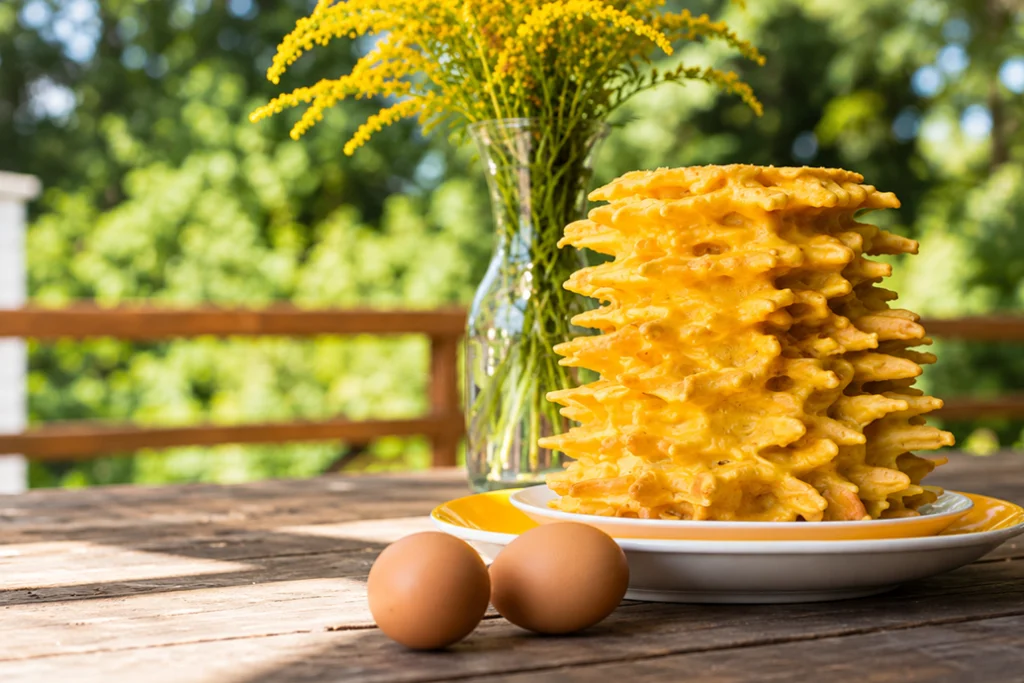
Šakotis is a traditional Lithuanian tree cake known for its tall, hollow center and golden, branch-like spikes. Made from an egg-rich batter with ingredients such as flour, butter, sugar, and cream or sour cream, it is baked by slowly rotating a spit or mould while thin layers of batter are poured over it. The turning motion and dripping batter create its unmistakable silhouette.
In Lithuania, šakotis is more than an eye-catching dessert. It is associated with weddings, Christmas, Easter, and other important family gatherings, where its size and unusual shape make it a natural centerpiece. For visitors, tasting tree cake is a delicious way to explore Lithuanian food culture—and watching it being made can be just as memorable as eating it.
Read More: What to Pack for a Baltic States Tour
Read More: What to Pack for a Baltic States Tour
The Lithuanian word is related to šaka, meaning “branch.” The cake’s name reflects the uneven projections that form as batter drips and sets around the rotating centre. It is also known as raguolis, a name associated with its horned or spiked appearance. The cake is usually tall and conical, with a hollow middle where the baking spit or mould once sat.
Its texture differs from a typical frosted layer cake. Thin outer tips can be crisp and toasted, while thicker sections are more substantial and buttery. Šakotis is often served in broken or sliced pieces alongside coffee or tea, rather than smothered in icing.
How Is Traditional Šakotis Made?
The process takes patience, heat control, and a steady hand. A baker prepares a pourable batter, traditionally using wheat flour, eggs, butter, sugar, and cream or sour cream. Recipes vary by region, bakery, and family, so no single ingredient ratio represents every Lithuanian tree cake.
The baking process, step by step
- Prepare the batter: The ingredients are mixed until the batter can be poured in a thin stream.
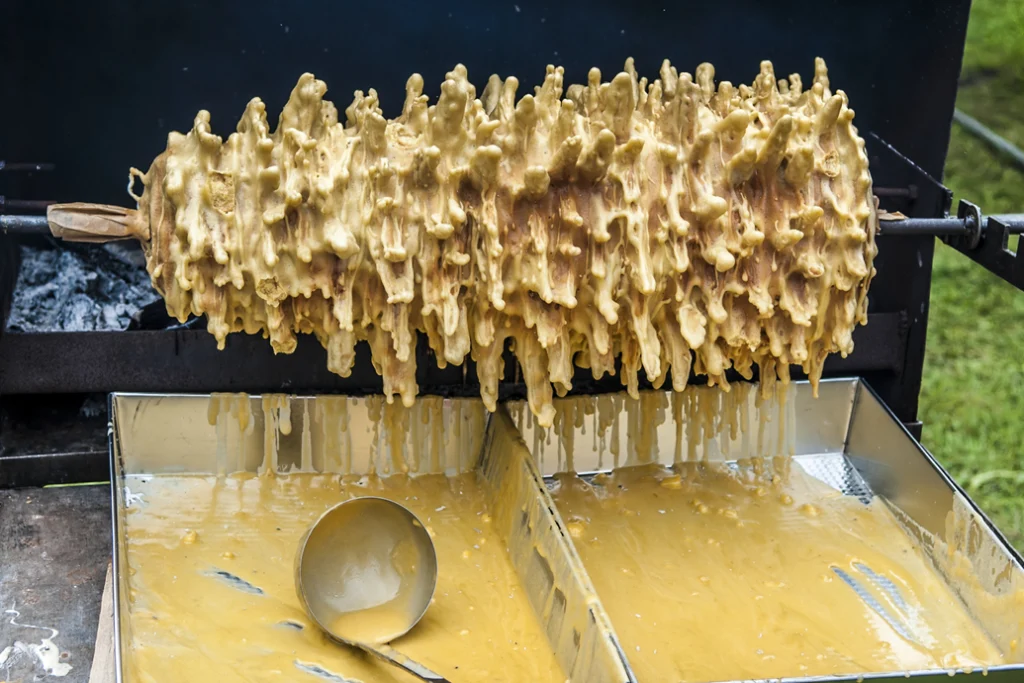
- Heat the rotating spit: A wooden or metal mould is positioned near an open fire or inside a specialized oven.
- Add thin layers: The baker pours or drizzles batter over the rotating mould, allowing it to set before adding more.
- Build the branches: As batter drips and browns, it forms irregular points around the cake.
- Cool and remove: Once baked, the cake is cooled enough to release from the mould and may be served plain or decorated.
Traditional open-fire baking is a craft that requires attention throughout the process. Today, some producers use modern equipment, while others demonstrate older techniques over a wood fire. The method matters because it shapes both the cake’s appearance and its toasted flavour.
The History Behind Lithuania’s Tree Cake
Šakotis belongs to a wider European family of spit cakes, which are made by applying batter or dough around a rotating rod and baking it as it turns. Similar cakes exist in neighboring countries under different names and with their own local methods. This shared culinary history makes tree cake an example of how food traditions travel across borders and become rooted in local celebrations.
Some tourism accounts connect the cake’s origins to medieval monastic baking, but the documented history of its production in Lithuania is more nuanced. Lithuania’s national encyclopedia describes tree cakes becoming established in the country in the second half of the 19th century, first in manor houses and religious settings, before the skill spread more widely. By the early 20th century, home cooks and culinary courses helped keep the tradition alive.
The safest way to tell its story is to distinguish tradition from certainty: recipes and techniques developed over time, and claims about a single inventor or exact birthplace should be treated cautiously. What is clear is that šakotis became a celebrated Lithuanian festive cake and remains a recognizable symbol of the country’s culinary heritage.
Why Šakotis Is Served at Special Occasions
The cake’s scale and dramatic shape make it well suited to a shared celebration. It is commonly associated with weddings and other milestone gatherings, as well as major holidays such as Christmas and Easter. A whole cake can be placed in the center of a table, then broken or sliced so guests can share it.
For many families, the cake also carries memories of relatives, local bakeries, and the work involved in preparing food for guests. Traditions differ from household to household, so it is better to think of šakotis as a familiar celebration food than as a rule followed by every Lithuanian family.
Trending New Year Latvia Vacation Package : New Years in Riga December 4 Days / 3 Nights The Grand Tour of Lithuania (13 Days, 12 Nights)
| Feature | What to know | Why it matters |
|---|---|---|
| Main ingredients | Eggs, wheat flour, butter, sugar, cream or sour cream | Creates a rich batter that browns in layers. |
| Distinctive shape | Tall cone with branch-like spikes and a hollow center | The rotating spit and dripping batter form the pattern. |
| Texture | Crisp, toasted tips with denser inner sections | A different bite from soft frosted cake. |
| Occasions | Weddings, Christmas, Easter, and family celebrations | Often served as a shared centerpiece. |
| Related cakes | Spit cakes found in parts of Central and Eastern Europe | Shows a broader regional baking tradition. |
Where Can You Try Šakotis in Lithuania?
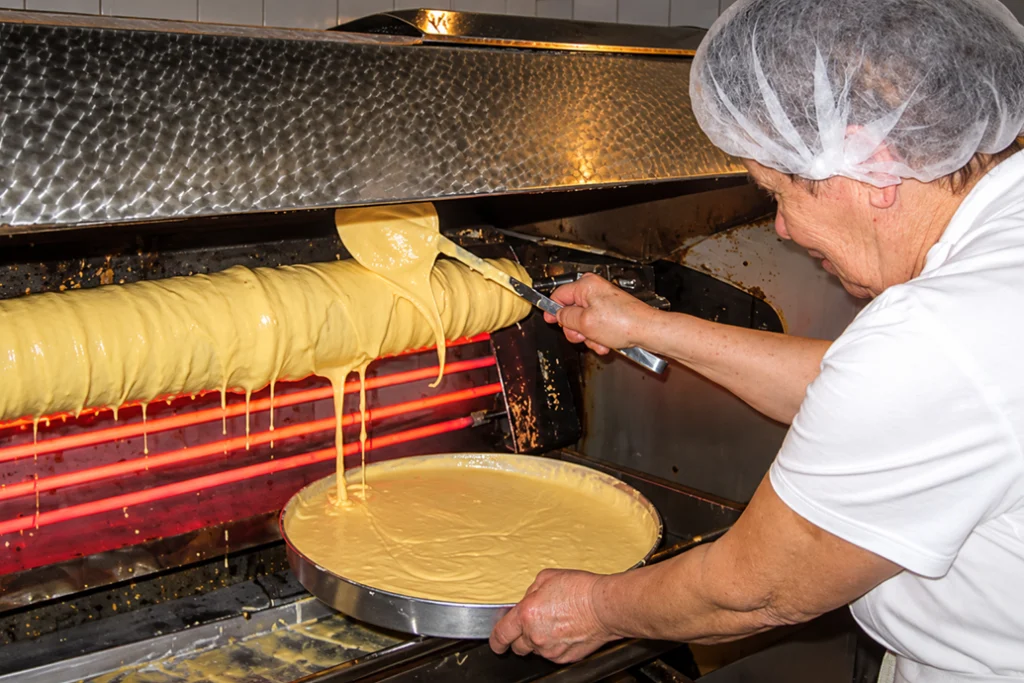
Start with a traditional bakery or a food-focused cultural experience. Lithuania Travel highlights šakotis as a local specialty and recommends it as an edible souvenir. In Vilnius, Go Vilnius lists experiences where visitors can learn about tree-cake baking, and some bakers offer demonstrations or hands-on sessions. A visit to a specialist producer can help you see how the batter is applied and how the branches develop.
If you want to include a baking demonstration in your itinerary, contact the venue in advance. Ask whether the session is available on your dates, how long it lasts, whether reservations are required, and whether visitors can taste the cake afterward. Availability and language options can change seasonally.
Trending New Year Latvia Vacation Package : New Years in Riga December 4 Days / 3 Nights The Grand Tour of Lithuania (13 Days, 12 Nights)
Where Can You Try Šakotis in Lithuania?
- Choose a well-sealed cake from a bakery or reputable shop, and check its best-before date.
- Ask how the cake should be stored; shelf life varies with recipe, packaging, and moisture.
- For a souvenir, choose a size that fits your luggage and consider how fragile the protruding tips may be.
- Serve small pieces with coffee or tea; the cake is rich, so modest portions are often satisfying.
Frequently Asked Questions
Is šakotis the same as German Baumkuchen?
What does Lithuanian tree cake taste like?
Is šakotis eaten only at weddings?
No. Weddings are an important association, but it is also served at Christmas, Easter, and other celebrations. It can be bought and enjoyed outside special occasions, too.
Can I make šakotis at home?
It is possible, but traditional baking usually requires a rotating spit or specialized setup and careful control of heat. A conventional cake pan will not create the same branched shape.
Can I bring šakotis home as a souvenir?
Often, yes, but check the bakery’s packaging and your destination’s customs rules. Choose a protected package and follow the seller’s storage advice.
The Lasting Appeal of Šakotis
Šakotis brings together craft, celebration, and a memorable shape. Its layered baking process rewards patience, while its place at family gatherings gives it meaning beyond sweetness. Whether you sample a slice in a Lithuanian café, watch a baker work over a rotating spit, or bring a packaged cake home, learning about šakotis offers a practical and delicious introduction to Lithuania’s food heritage.
