

Do you need to tip in the Baltic countries?
Tipping at a glance: Lithuania vs. Latvia vs. Estonia
Situation | Lithuania | Latvia | Estonia |
Restaurant with table service | Round up or about 5–10% for good service | About 5–10% if service was good | Round up or about 5–10% for good service |
Café, bakery, or bar | Small change or round up; optional | Round up if you wish | Tip jar or rounding up; optional |
Taxi or ride-hailing | Usually no tip; round up if helpful | Usually no tip; round up if helpful | Usually no tip; app tip is optional |
Hotel porter / housekeeping | Small €1–€2 gesture if warranted | Small €1–€2 gesture if warranted | Not expected; small tip appreciated |
Tour guide | A few euros for a good group tour | A few euros for a good group tour | A few euros for a good group tour |
These are flexible travel guidelines, not official rules or fixed wage standards. A tip should reflect the service, the setting, and your own budget. If a restaurant has already added a service charge, you generally do not need to add another tip.
How much should you tip in restaurants?
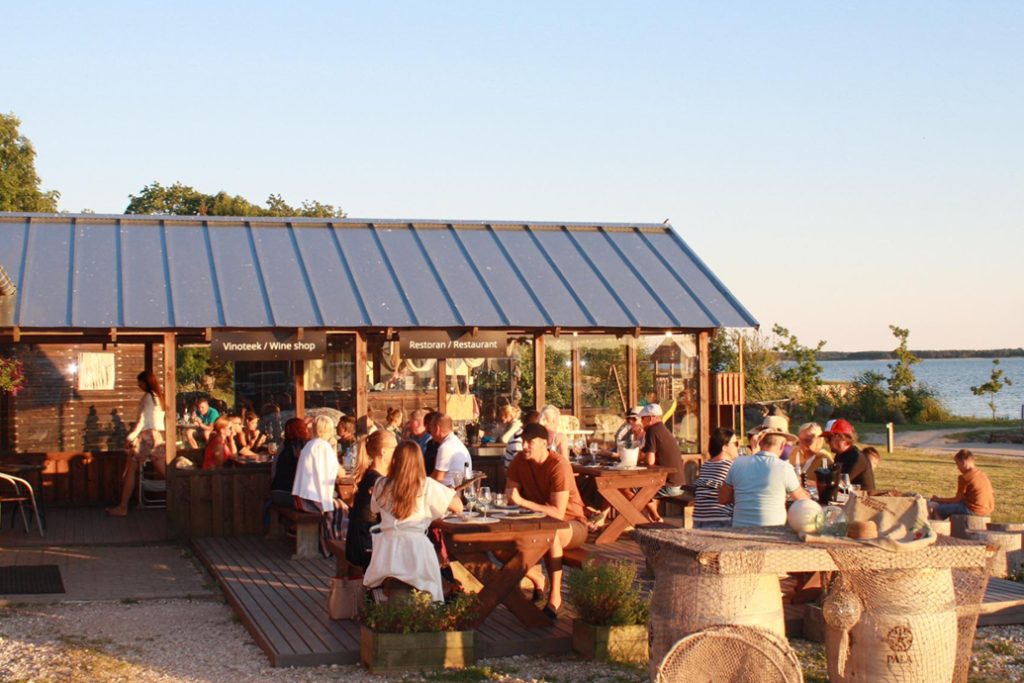
Restaurants are where travelers are most likely to wonder what is appropriate. For attentive table service, 5–10% is a reasonable range across the three Baltic states. If your bill is €30, for example, leaving €1.50–€3 is a modest-to-generous gesture. You can also round a €18.60 bill up to €20 rather than calculating a percentage.
You do not need to leave the same amount for every meal. At a counter-service café where you order and collect your food, tipping is not generally expected. If there is a tip jar and you want to contribute, spare coins are enough. For a fine-dining meal or particularly thoughtful service, you may choose to leave more, but North American-style tipping rates are not the default expectation.
Check the bill before adding a tip
Look for wording such as “service charge” or a separate service line before paying. It is not safe to assume every venue handles this the same way, particularly for large groups or special bookings. If a service charge is already included, adding another gratuity is entirely optional. If a card terminal displays suggested percentages, remember that the screen is a payment option—not proof that a tip is mandatory.
Do you tip in cafés, bars, and takeaway places?
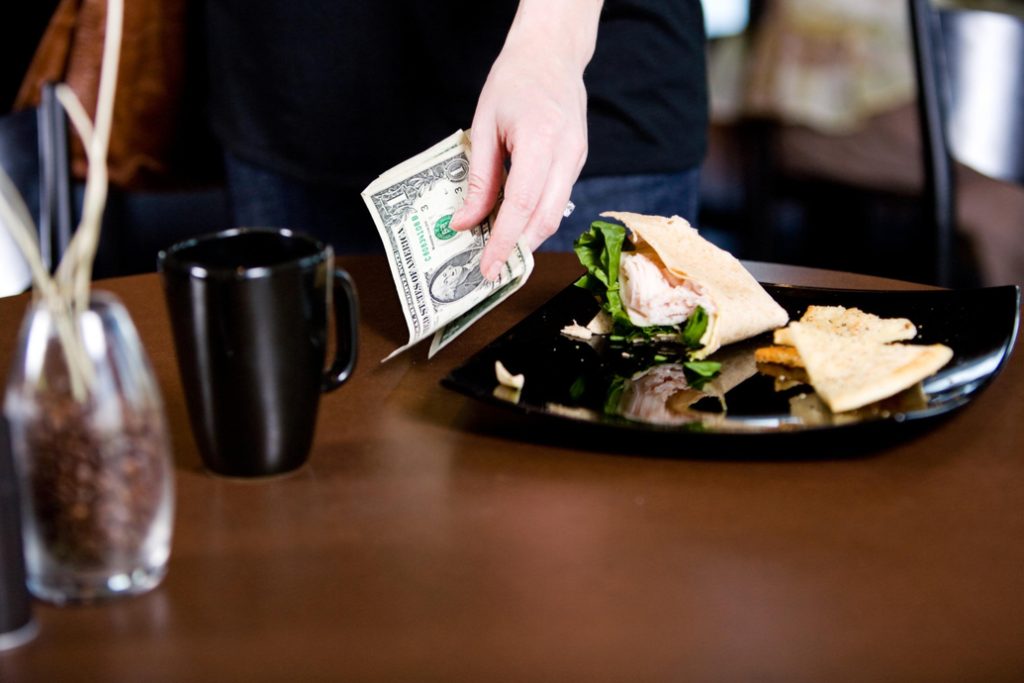
Usually, no tip is necessary when you buy a coffee at the counter, pick up a pastry, or order takeaway. Rounding up a small amount is a friendly gesture if someone has been especially helpful. In a bar, you can round up the total or leave a little extra for attentive table service, but you are not expected to tip for every drink.
Tourist districts may have more visible tip prompts than neighborhood cafés. Do not feel pressured by a screen or jar: choose an amount that feels comfortable, including zero when no extra service was provided.
Tipping taxi drivers and ride-hailing services
Taxi drivers in Lithuania, Latvia, and Estonia generally do not expect a percentage tip. Many travelers simply round up the fare, such as paying €9 for an €8.40 ride. You might offer a little more if the driver helps with several bags, waits during an agreed stop, or provides unusually helpful service.
For app-based rides, check the final fare and the app’s payment options. A tip feature may appear after the ride, but using it is optional. Confirm the price before starting an airport transfer, and use a reputable taxi company or ride-hailing app rather than accepting an unsolicited offer from someone inside an airport terminal.
What about hotels and tour guides?
Hotels
Hotel tipping is low-key. If a porter carries several heavy bags, €1–€2 per bag is a practical gesture. For housekeeping, a small amount such as €1–€2 per night can be appreciated during a longer stay, but it is not a universal expectation. Leave cash in a clearly visible place with a short note if you want to make it clear that the money is for housekeeping. You do not need to tip reception staff for routine check-in.
Guided tours and private drivers
For a walking tour or group excursion, a few euros per person is a reasonable way to thank a guide who made the experience engaging and useful. For a private guide or a full-day driver, a larger tip may make sense because the service is more personalized and time-intensive. There is no single required percentage: consider the length of the tour, the quality of the experience, and whether gratuities are already included in your bo
Cash or card: what is the easiest way to tip?
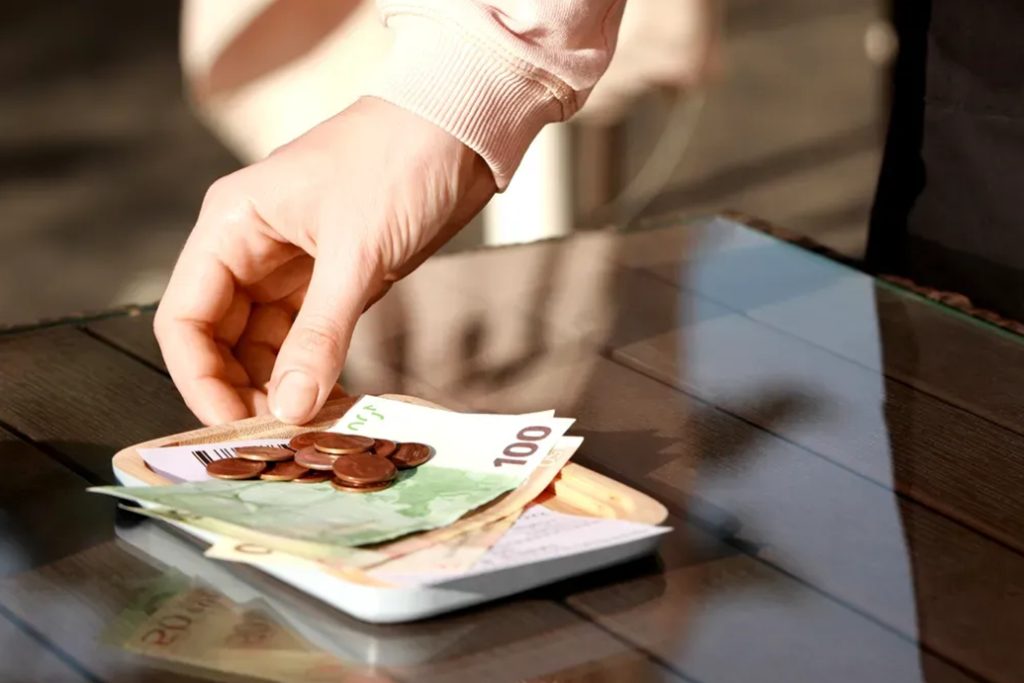
Cards and contactless payments are widely used in Vilnius, Riga, and Tallinn, but cash can still be useful for small tips. If you want the gratuity to go directly to the person who served you, cash is often the clearest option. Card systems differ by business, and a tip added to the terminal may be handled differently from cash left with staff.
You do not need to exchange a large amount just for tipping. Keep a few €1 and €2 coins or small notes and use your card for most purchases. If paying by card, ask whether the tip can be added before tapping, or leave cash if that is easier. Avoid leaving a tip in a foreign currency when euros are available.
Common tipping mistakes to avoid
- Assuming US tipping percentages apply to every purchase.
- Adding a second tip without checking whether a service charge is already included.
- Feeling obliged to tip because a card terminal suggests a percentage.
- Expecting a taxi, barista, or hotel receptionist to receive a tip for routine service.
- Leaving a large tip without checking the total or currency shown on the payment screen.
Frequently Asked Questions
Is tipping rude in the Baltics?
No. A modest tip is generally appreciated, but tipping is not compulsory. A sincere thank-you and polite behavior are also appropriate ways to show appreciation.
Is 10% a good tip in Lithuania, Latvia, and Estonia?
Yes. Around 5–10% is a useful guideline for good table service. You can tip less, round up, or leave nothing if the service charge is included or the service did not meet expectations.
Do I need cash to tip in the Baltic states?
No, but carrying a few euros in small denominations is useful. Card tipping may be possible, although the options and how tips are distributed vary by business.
Should I tip for coffee or takeaway?
Usually not. Rounding up or using a tip jar is optional, rather than expected.
Do Baltic hotels add tips to the bill?
There is no single rule across all hotels. Review your bill and booking terms for service charges, and ask staff if you are unsure.
The Bottom Line
When tipping in the Baltics, think modest, optional, and service-based. For a good restaurant meal, round up or leave around 5–10%; for cafés and taxis, rounding up is plenty; and for hotel staff or guides, a small cash thank-you is appropriate when the service merits it. Check the bill, ignore pressure from automated tip prompts, and use your judgment. You can travel through Lithuania, Latvia, and Estonia comfortably without following North American tipping rules.
